
The Greenwich Portal login is the main starting point for students who want to access University of Greenwich services online. Through the University of Greenwich Portal, students can reach Moodle for course materials and assignments, My Learning for study information, email for official communication, and timetable and attendance services for managing their studies. This guide explains how to log in, access Moodle, check timetables and attendance, use university services, handle admissions and assignments, access the portal on mobile, and solve common Portal problems.Visit our Homepage for more information.
What Is the Greenwich Portal?
This is the University of Greenwich’s central online gateway, giving students convenient access to key services from one place. After a Portal login, students can reach Moodle, email, calendars, library resources, marks, timetables, attendance information and other academic services.
The Greenwich university portal provides a personalised experience, so available links can vary by student. Its layout may also change when University systems are updated, meaning older screenshots may look different from the current portal.
Greenwich Portal Login: How to Sign In
The Portal login helps students quickly access their University account and online study services. Follow these simple steps to sign in securely.
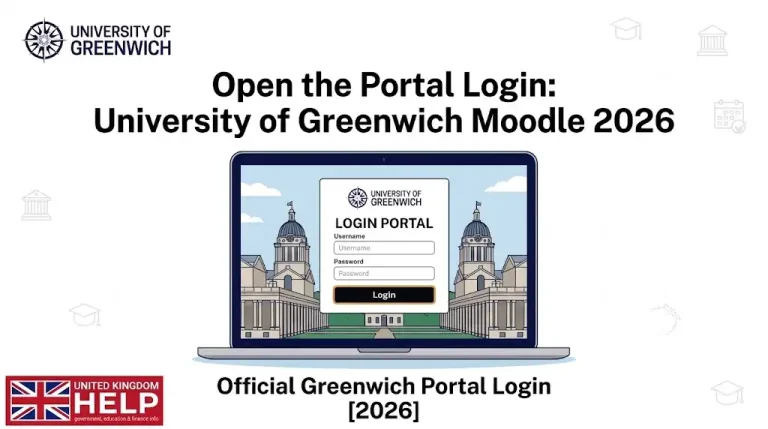
Step 1: Open the Portal
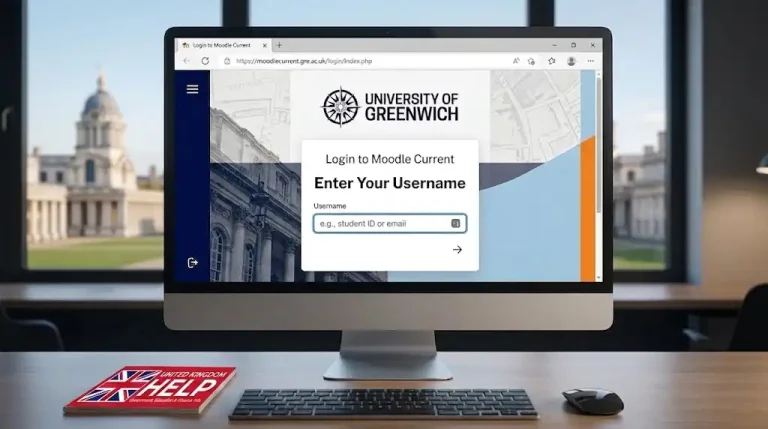
Step 2: Enter Your Username
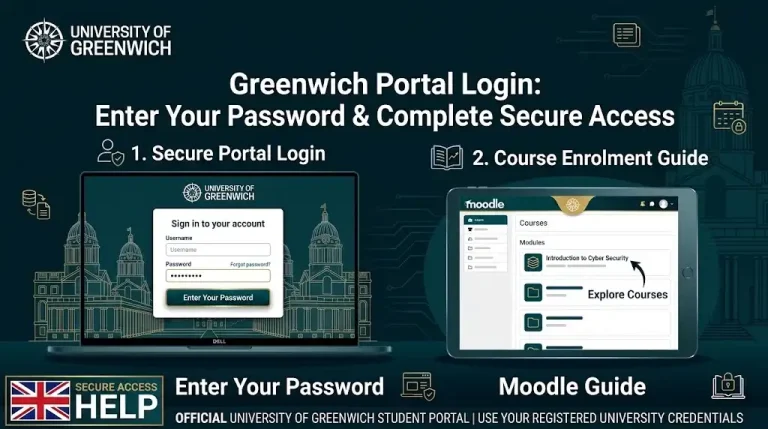
Step 3: Enter Your Password
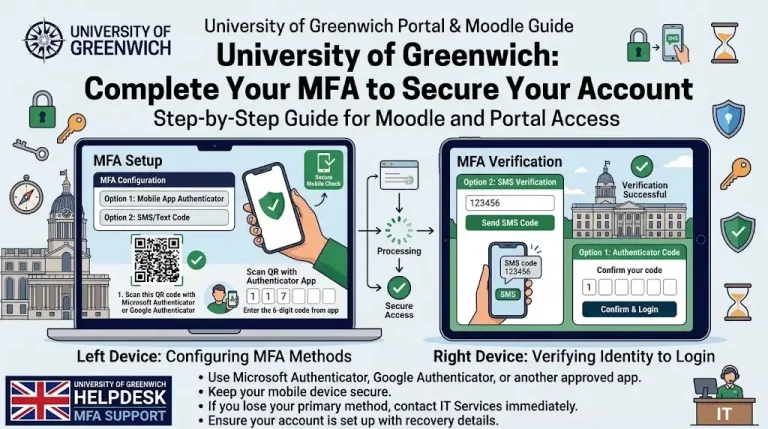
Step 4: Complete MFA
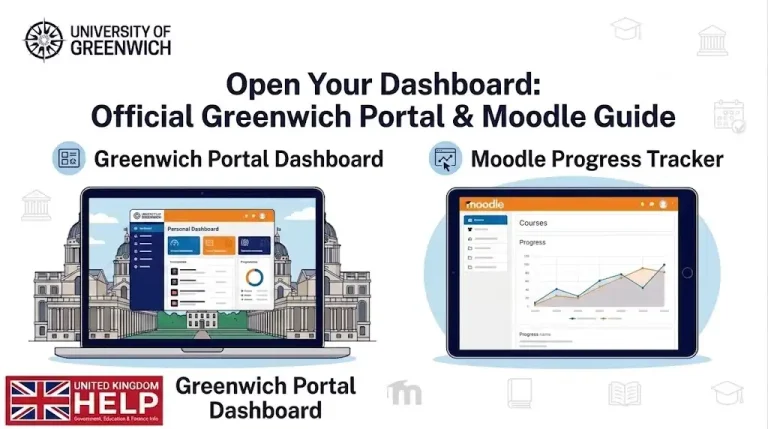
Step 5: Open Your Dashboard
Greenwich Portal Moodle: How to Access Moodle
Greenwich Portal Moodle is the main online learning area where students can access module content, assignments, quizzes, activities, announcements and feedback. To reach Moodle, first complete your Greenwich login, then follow these short steps:
Step 1: Sign In
Step 2: Find Moodle
Step 3: Open Moodle
Step 4: Find Your Module
Step 5: Check Moodle Regularly
Greenwich Portal My Learning
Greenwich Portal My Learning is another important area for students.
The My Learning section connects students with study-related information and services. In particular, the University explains that students can access the teaching timetable through the Teaching timetable link on the My Learning tab. (University of Greenwich)
Depending on your course and account, My Learning may help you reach information relating to:
If you are trying to find something related to your course, checking Greenwich Portal My Learning is often a useful first step.
Greenwich Portal Timetable: Find Your Classes
The Greenwich Portal timetable is essential for keeping track of lectures, seminars, workshops and other teaching activities.
The University says programme and module timetables are available through its timetable system and can also be accessed through the Teaching timetable link in My Learning. Your personal timetable becomes available after you complete online registration and are allocated to the relevant teaching groups.
The University also advises students to check timetable information frequently because schedules can change.
What to Check on Your Timetable
Before travelling to campus, check:
Do not depend completely on an old timetable screenshot. A class can be moved or updated after the original timetable was published.
For new students, timetable visibility can also depend on completing registration and being allocated to teaching groups. If your timetable is missing immediately after joining the University, check your registration status before assuming that your account is faulty.
Greenwich Portal Attendance
Greenwich Portal attendance is particularly important because the University monitors student attendance and engagement.
For the 2025/26 academic year, the University says students should register attendance at timetabled sessions. The main method is scanning an in-class QR code using a mobile device with single sign-on and MFA. Where available, students can alternatively tap their student ID card on a card reader. (University of Greenwich)
How Attendance Registration Works
When you arrive at a relevant class:
The University states that students are responsible for making sure attendance is recorded at the appropriate time and that attendance data is not retrospectively amended.
This means you should not wait until later in the day to try to fix a missed attendance registration.
Do Not Register Attendance for Someone Else
Attendance must represent genuine participation. The University’s 2025/26 guidance warns that submitting attendance fraudulently or registering attendance for another student can be treated as misconduct. (University of Greenwich)
Never share attendance QR codes, student cards or authentication details with another student.
Greenwich Portal Email
Your Greenwich Portal email is another service you should check frequently.
University emails can contain important information about:
The University portal provides access to email alongside other services. (University of Greenwich)
A useful routine is to check your student email once in the morning and again later in the day, particularly during busy periods such as registration, assessment deadlines and examinations.
If you are expecting an important message but cannot find it, check your junk or spam folder and make sure you are signed into the correct University account.
Greenwich Portal Admissions
Students searching for Greenwich Portal admissions should understand the difference between applying to the University and using the student portal after enrolment.
Applicants should use the University’s official admissions information for current course, application, registration and enrolment guidance.
Official University of Greenwich Website
During the admissions and registration journey, you may need to follow instructions relating to:
Once you become an enrolled student, your University account can provide access to additional services through the University of Portal.
Do not assume that every admissions service and every student service uses exactly the same login. Follow the University’s instructions for the particular stage you are completing.
University of Greenwich Portal Student Dashboard
After completing the Portal login, you will normally reach a personalised student environment.
The portal uses different areas or components to provide links, information and live services. The University describes portal pages as containing individual links, groups of related links, text, images, live information and tools such as LibrarySearch. (University of Greenwich)
A typical study workflow might be:
Portal → My Learning → Moodle → Module → Assignment
Another task might follow:
Portal → Email → University Message
Or:
Portal → My Learning → Teaching Timetable
This is why learning the portal structure can save time. Instead of searching Google every time you need a University service, begin with your official student account.
Main Services Available Through Portal
The Greenwich university portal can act as a central starting point for several student services.
Moodle
Use Moodle for module learning materials, activities, assessments and feedback.
Use University email for official academic and administrative communication.
Library
The portal can provide access to library resources and tools for academic research. (University of Greenwich)
Marks and Academic Information
The portal may provide access to marks and other student information depending on your account and course.
Timetable
Use the timetable services to check teaching arrangements and changes.
Announcements
University announcements can provide important information about services, deadlines and student activities.
The exact options you see may differ according to your programme, student status and the University’s current system configuration.
How to Submit an Assignment Through Moodle
One of the most important reasons students use Greenwich Portal Moodle is submitting coursework.
The exact submission process depends on how your lecturer has configured the Moodle assignment, so always read the instructions for the specific assessment.
A typical process is:
Open Moodle → Select Module → Open Assignment → Read Instructions → Upload File → Submit
Open Your Module
After your Portal login, open Moodle and select the appropriate module.
Find the Assignment
Look for the assignment activity on the module page. Read the deadline carefully.
Check the Requirements
Before uploading, check:
Upload the File
Select the upload area and choose your completed file.
Complete the Final Submission
Some Moodle assignments require a final submission confirmation after the file has been uploaded.
Do not assume that an uploaded document automatically counts as a completed submission.
Save Proof
After submitting, check that Moodle shows a successful submission status or confirmation. Keep this information until the assessment process is complete.
This is especially useful when submitting close to a deadline.
What If Your Moodle Course Is Missing?
A common problem is completing the Greenwich login successfully but not seeing a particular Moodle course.
This does not automatically mean that your account is broken.
Check these possibilities:
1. Check Registration
Make sure you have completed the University’s required registration process.
2. Check Your Account
Confirm that you are using your Greenwich University account rather than a personal account.
3. Check Moodle Carefully
Look through your Moodle course areas and dashboard rather than assuming the module must appear on the first screen.
4. Check Availability
A lecturer or course team may not have made a particular Moodle area available yet.
5. Check Your Email
Look for messages from your lecturer, faculty or University support team.
6. Contact the University
If registration is complete and the module should be available but remains missing, contact the appropriate University support service.
Avoid creating another account simply because a course has not appeared.
Portal Login Not Working
If your Portal login fails, work through the problem in a logical order.
Check Your Username
Make sure you have entered the correct username and included @gre.ac.uk as required by the University.
Check Your Password
Look for:
Check MFA
If the login process reaches MFA but fails, check your authentication method.
The University recommends Microsoft Authenticator and provides specific MFA setup guidance.
Try Another Browser
If the page itself behaves strangely, try:
Check the Official Portal
Always start from the University’s official portal:
If the issue continues, use the University’s official IT support channels rather than entering your credentials into an unofficial password-recovery website.
Reset Your Greenwich Password
If you have forgotten your password, use the University’s official password-management service.
Greenwich Password Self-Service
Do not use random third-party websites claiming to reset your Greenwich account.
Your University password protects access to multiple services, so treat it as confidential.
You should also avoid giving your password to:
University staff should not require you to disclose your password.
Greenwich Portal MFA and Account Security
Multi-Factor Authentication adds another layer of protection to your University account.
The University recommends Microsoft Authenticator and explains that number matching helps users confirm which system they are approving.
Good Security Habits
If you receive an MFA request when you are not trying to sign in, do not approve it.
Can I Use Portal on a Mobile Phone?
Yes. The Greenwich university portal can be accessed through a mobile browser.
The University’s current Moodle guidance specifically explains that the portal adapts to smaller screens and that Moodle may appear inside a three-line expandable menu on phones and tablets. (Digital Student Centre)
Mobile Login Tips
When accessing the portal from your phone:
Moodle can also be accessed directly from a mobile browser.
Greenwich Portal Timetable Problems
If your Portal timetable is missing, first check whether you have completed online registration.
The University explains that your personal timetable becomes available once registration is completed and you have been allocated to the relevant teaching groups.
If your timetable is visible but something looks wrong, check again later because timetable information can change.
The University advises students to check timetables daily during the first four weeks of term and regularly afterwards.
Before travelling to a campus, checking the current timetable can help prevent unnecessary trips caused by a room or schedule change.
Greenwich Portal Attendance Problems
If your Portal attendance record does not show a session, first think about how and when you registered.
For 2025/26, the University says attendance is normally registered through an in-class QR code with single sign-on and MFA, with student ID card tap-in available where card readers are installed.
If you missed the registration opportunity, do not try to manufacture evidence that you attended.
Instead, follow the University’s current attendance or absence procedure and contact the appropriate support team if you believe there was a genuine technical problem.
The University specifically states that attendance data is not retrospectively amended, so registering attendance at the correct time is important.
Portal Bus Ticket and Travel Information
Some students search for Portal bus ticket when they are looking for transport information connected with university life.
It is important to distinguish the student portal from external transport-ticketing services.
The University of Portal is primarily a student services gateway. It should not automatically be assumed to be the place where every bus pass or travel ticket is purchased.
If you need transport information, check the University’s current travel information and the relevant transport provider before paying for a ticket.
Before purchasing, verify:
Do not enter your Greenwich login details into a third-party transport website unless the University specifically directs you there.
Greenwich Portal Email Not Working
If your Portal email does not appear to be working, start with the simplest checks.
If you are waiting for a registration, assessment or timetable message, do not rely exclusively on your personal email. Make your University mailbox part of your normal daily routine.
Important Official Greenwich Links
For students, keeping the main official addresses available can make everyday access easier.
Greenwich: Official Student Portal
Greenwich Moodle: Official Moodle Environment
Password Service: Official Password Self-Service
University Website: Official University of Greenwich Website
For timetable information, the University currently directs students to the timetable system through My Learning and the portal.
Portal Daily Student Routine
Once you understand the Portal, you do not need to spend a lot of time searching for each service individually.
A simple routine can keep you organised.
Before Class
Check your Portal timetable.
Confirm the:
During Class
Complete the required attendance registration.
After Class
Open Moodle and look for new:
Every Day
Check your University email.
Every Week
Review your Moodle deadlines and timetable for the following week.
This routine can help prevent common problems such as missing an assessment announcement, arriving at an old classroom or forgetting to register attendance.
Greenwich Login: Final Student Checklist
Before starting or continuing your studies, make sure you can:
FAQs
Final Thoughts
The Greenwich Portal is your central online hub for University life. With a working Greenwich Portal login, you can access Moodle, My Learning, your timetable, email and attendance services. Always use official University resources, keep your password and MFA secure, and check Moodle, email and timetable updates regularly. If problems occur, verify your login details, registration and module access before contacting University support.