
Applying for your first British passport is usually straightforward when your British nationality is already established and your supporting documents are ready. The main issues tend to arise when applicants confuse immigration status with British citizenship, submit incomplete evidence, or use documents that do not match the information on their application.
For a first adult UK passport application, you generally need to be a British national, be aged 16 or over (or within three weeks of turning 16), and have never previously held a UK passport. GOV.UK also explains that a different application route applies if you are applying from outside the UK.
This guide explains who can apply, how to make a passport application UK applicants can use, which documents may be required, the current passport application UK fees, what the passport application cost UK applicants should expect, and what happens after submitting your application.
What Is a UK Passport Application?
A UK passport application is the process of requesting a British passport from HM Passport Office. If you are applying for your first adult passport, you must generally already be a British national and meet the age and first-passport requirements.
For most applicants, the passport application UK process involves completing an online or paper application, providing a suitable photograph, confirming your identity, submitting the required supporting documents, and paying the applicable fee.
Who Can Apply for a New British Passport?
The first question is not how to fill in the passport form. It is whether you are already entitled to a British passport.
For a first adult UK passport application, GOV.UK states that you can apply if:
You must also apply for a first adult passport if your last UK passport was issued before 1 January 1994. An existing child passport can normally continue to be used until it expires, even after you turn 18.
British citizenship and immigration status are different
Having lived in the UK for many years does not automatically mean you are entitled to a British passport. Immigration permissions such as settled status or indefinite leave to remain are not the same as British citizenship.
British citizenship may have been acquired through birth, descent, registration or naturalisation. If you became British through naturalisation or registration, you should have the relevant certificate before starting your passport application UK process.
A pending citizenship or naturalisation application does not make you eligible for a British passport. The citizenship process must be completed first.
Quick Tip: Before paying the UK passport application fee, make sure you can demonstrate the nationality on which your application is based. Passport fees are not refunded simply because you are not entitled to a passport.
How to Make a New UK Passport Application
Most people applying from inside the UK can apply online. A paper application is also available if you prefer or need to apply that way.
The online UK passport application route requires a digital photograph, supporting documents, someone who can confirm your identity and a debit or credit card for payment.
1. Apply Online
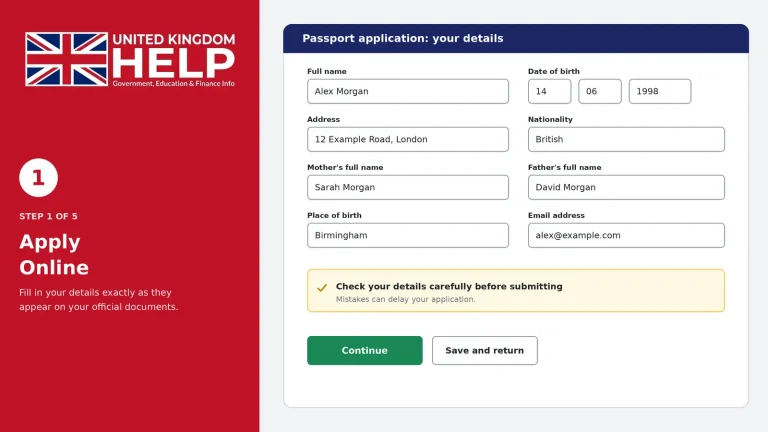
Complete the application with your:
Enter everything exactly as shown on your official documents. Check your information carefully before submitting your passport application UK form to avoid unnecessary delays.
2. Add Your Digital Photo
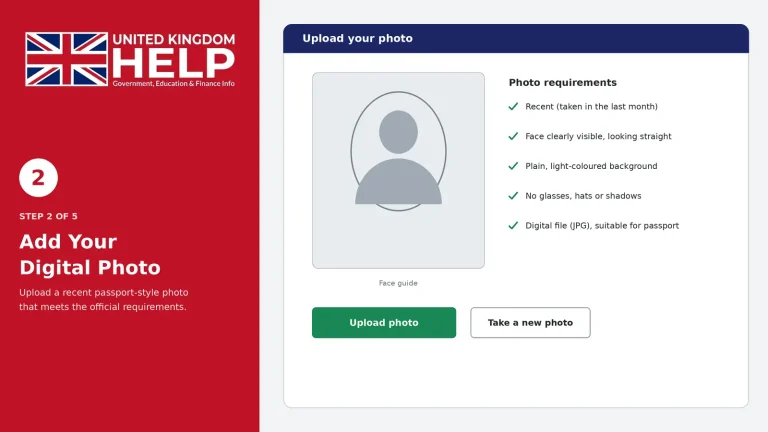
Upload a recent digital passport photo that meets the official requirements.
Make sure:
A photograph that does not meet the requirements can delay your UK passport application.
3. Confirm Your Identity
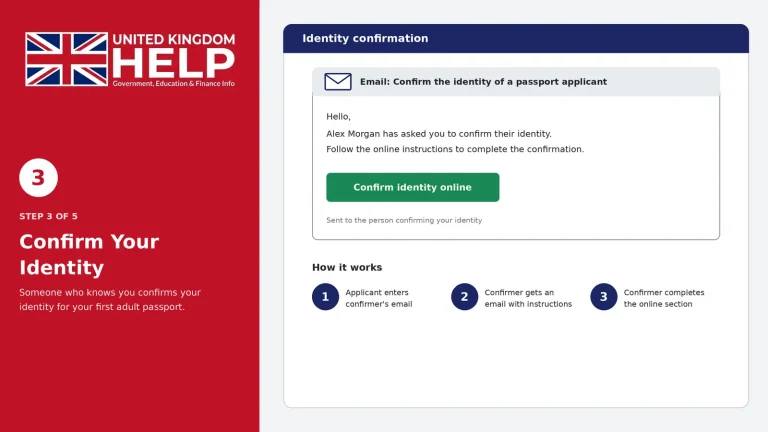
Someone will need to confirm your identity for your first adult passport.
For online applications, they normally complete this through the instructions sent by email. Follow the instructions provided during your passport application UK process.
4. Send Your Documents
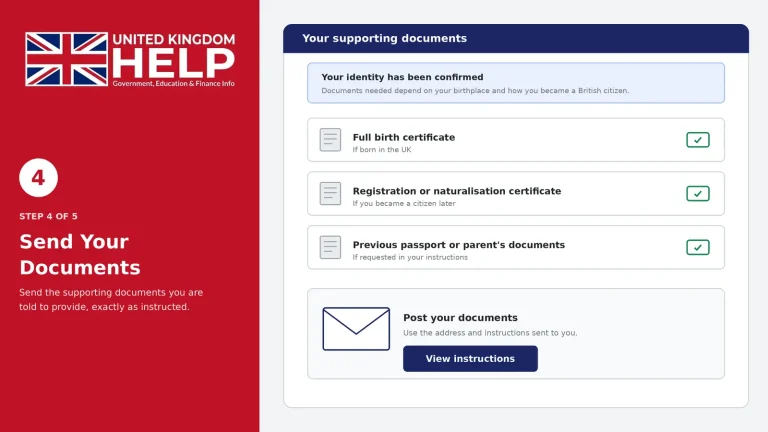
After your identity is confirmed, you will be told which supporting documents to send.
The documents you need depend on your:
Send the required documents exactly as instructed. Missing evidence is one of the issues that can cause delays in a UK passport application.
5. Use a Paper Form if Needed
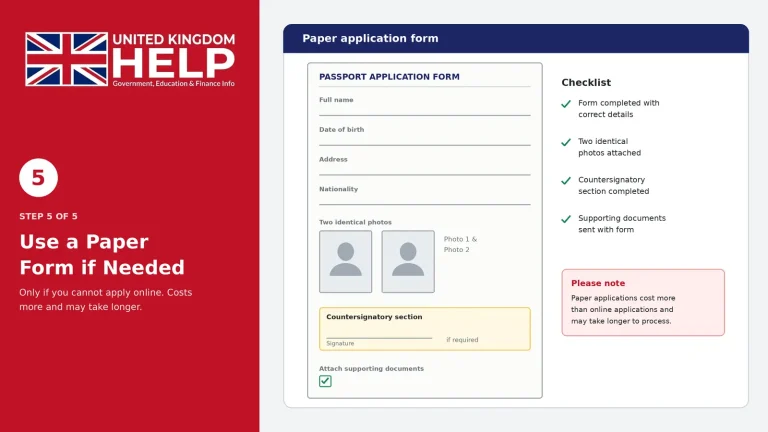
If you cannot apply online, you can use a paper application.
You will generally need to:
Keep in mind that paper applications have a higher passport application cost UK applicants should budget for and may take longer than online applications.
Documents Required for a UK Passport Application
There is no single document checklist that applies to every applicant. HM Passport Office determines the evidence required according to your nationality history, place of birth and personal circumstances.
However, the following categories are commonly important when preparing a UK passport application.
Proof of British Nationality
Your citizenship evidence depends on how you became British.
For example, someone with a certificate of naturalisation or registration will normally need to provide that certificate. Someone born in the UK may need a full birth or adoption certificate together with evidence relating to a parent’s British nationality or immigration status, depending on their date and circumstances of birth.
A UK birth certificate should not automatically be assumed to prove British citizenship on its own.
Identity Documents
You may need documents that establish your identity and connect your personal details with your nationality evidence.
Your documents should be consistent with the information entered on your passport application UK form. If names, dates of birth or other important details differ, additional evidence may be required.
Documents for Applicants Born Outside the UK
Applicants born overseas may have additional evidence requirements.
Depending on the circumstances, GOV.UK lists documents such as:
The exact requirements depend on the circumstances surrounding your British nationality.
Name-Change Documents
If the name on your application is different from the name shown on your birth, nationality or other official records, you may need evidence explaining the change.
Depending on the circumstances, this could include documentation such as a marriage or civil partnership certificate or a deed poll.
Common Mistake: Do not submit a UK passport application assuming that an unexplained difference in names will simply be overlooked. Inconsistent information can lead to additional checks and delay.
Original Documents
For a first adult passport application, GOV.UK states that original documents must be sent and photocopies are not accepted. If you do not have an original certificate, you should obtain an official copy.
Documents that are not in English or Welsh require a certified translation.
Keep copies or records of important documents before sending originals.
UK Passport Application Fees
One of the most common questions applicants ask is: how much does a UK passport application cost?
The passport application UK fees depend on the type of passport and how you apply. For applications made from within the UK, the standard fees are:
| Passport type | Online | Paper |
|---|---|---|
| Adult standard 34-page passport | £102 | £115.50 |
| Adult 54-page frequent traveller passport | £116 | £129.50 |
| Child standard 34-page passport | £66.50 | £80 |
| Child 54-page frequent traveller passport | £80.50 | £94 |
| Passport for people born on or before 2 September 1929 | Free | Free |
These are the fees stated in the supplied guidance. Because passport application UK fees can change, applicants should check the official GOV.UK fee information immediately before submitting an application.
What Is the UK Passport Application Fee for a First Adult Passport?
For a standard first adult passport application from inside the UK, the stated fee is:
This means the online route has a lower passport application cost UK applicants should expect for a standard adult passport.
The final amount you pay can depend on the type of application and any additional service you choose. Always check the current official fee before payment.
Fees are not refundable if you cancel your application or are found not to be entitled to a passport.
What If You Apply From Outside the UK?
Overseas applications have different fees.
The supplied guidance lists a standard adult passport fee of £116.50 for online applications and £130 for postal applications from outside the UK. Additional delivery or local charges may also apply depending on the application location.
If you are applying from overseas, use the guidance for your country rather than relying on UK-based passport application UK fees.
Passport Application UK: Online vs Paper
| Application method | What you need | Standard adult fee | Practical point |
|---|---|---|---|
| Online | Digital photo, identity confirmation and supporting documents | £102 | Usually the simpler route |
| Paper | Form, two printed photos, countersignatory and supporting documents | £115.50 | More paperwork and may take longer |
The legal and evidential requirements do not disappear simply because you apply online. Your nationality and identity still have to be established.
What Happens After Your UK Passport Application?
When comparing the passport application cost UK applicants face, the online route is currently cheaper for a standard adult application.
Submitting your UK passport application does not necessarily mean your passport will be issued immediately.
HM Passport Office may ask for additional evidence if something needs clarification. Some applicants may also be asked to attend an interview to confirm their identity. GOV.UK states that interviews can take place online by video.
If an interview is required, answer questions accurately and make sure the information is consistent with your application and supporting evidence.
How Long Will a New Passport Take?
Processing times are not guaranteed, so it is sensible to apply well before planned international travel.
The Home Office reported that in 2025, where no further information was required, 99.7% of standard applications from the UK were processed within three weeks. This does not mean every application will take three weeks, particularly where additional checks or documents are required.
Important: Do not book travel on the assumption that your passport will arrive by a particular date. GOV.UK specifically advises applicants to wait until they have their passport before making travel arrangements.
UK Passport Application Checklist
Before submitting your application, work through this checklist:
Common Reasons a UK Passport Application Can Be Delayed
The application itself may be straightforward, but supporting evidence can create problems.
Common issues include:
The supplied source material similarly highlights missing or inconsistent evidence as a major cause of passport delays and refusals.
A careful document check before submitting your passport application UK form can prevent many avoidable problems.
Frequently Asked Questions
Conclusion
A new UK passport application starts with confirming nationality, not simply filling out a form. For a first adult passport, you need to meet the eligibility requirements, provide evidence that establishes your British nationality and identity, submit the correct photograph and supporting documents, and pay the applicable fee.
For applications made inside the UK, the stated standard adult fee is £102 online or £115.50 by paper form. The exact passport application UK fees and document requirements can vary according to your application type, birthplace, citizenship route and personal circumstances.
Before submitting your passport application UK form, check the latest official guidance, confirm the current UK passport application fee, and make sure your supporting documents are complete.
Careful preparation is particularly important because passport fees are non-refundable and processing times are not guaranteed.
Read more