
The CareDocs Portal gives authorised care staff a secure place to access and manage essential care information. The CareDocs Cloud Portal can support care plans, daily notes, monitoring charts, risk assessments and handover records, depending on the organisation’s setup. If you need CareDocs Portal login help, this guide explains what to prepare, where to sign in, what to expect after access, and how to handle common problems.Visit our Homepage for more information.
CareDocs Portal at a Glance
The system brings several parts of everyday care documentation together. Instead of relying entirely on separate paper records, authorised staff can use a central digital record to document relevant information and keep it available to the appropriate care team.
|
CareDocs area |
Main purpose |
|---|---|
|
Portal access |
Sign in using the organisation’s Home ID and personal credentials |
|
Care planning |
Maintain person-centred care information |
|
Daily recording |
Document care activities and routine observations |
|
Monitoring |
Record information such as food and fluid intake |
|
Risk management |
Maintain structured risk assessments |
|
Body mapping |
Record visual observations such as wounds or bruising |
|
Handover |
Pass relevant information between care teams |
|
Security |
Keep confidential records and account details protected |
The exact features available to an individual may depend on their role and the configuration used by their organisation. Staff should therefore follow local procedures alongside the system’s available functions.
What You Need Before a CareDocs Portal Login
A successful CareDocs Portal login depends on having the correct account information. The supplied material identifies three key credentials:
- Home ID — identifies the care home or organisation.
- Username — identifies the individual authorised user.
- Password — provides private access to the account.
These details should not be treated as interchangeable. In particular, staff should use their own named account instead of sharing another employee’s login. Individual access helps maintain appropriate accountability when care information is entered or updated.
How to Sign In to CareDocs Cloud Portal
The login process is generally uncomplicated once your organisation has provided the required details.
Step 1: Open the Official Portal
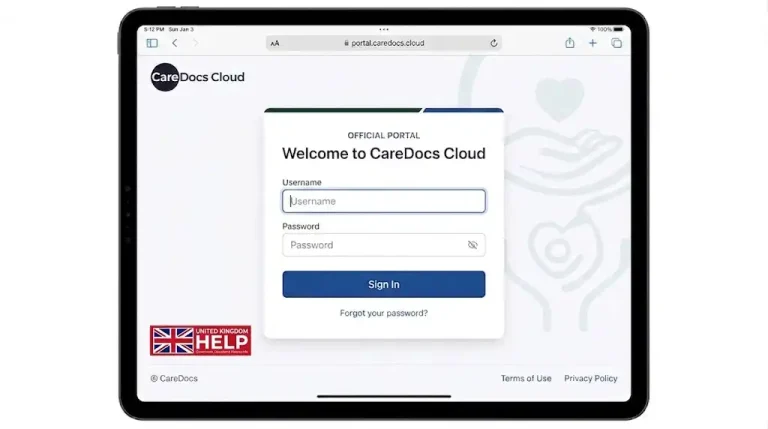
- Visit the official CareDocs Cloud Portal.
- Avoid unknown websites or third-party login pages.
- Use the official login address provided by your organisation.
Step 2: Enter Your Home ID
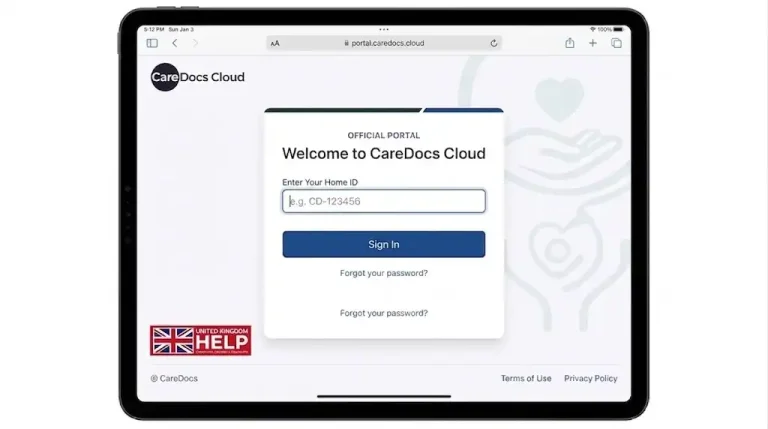
- Type the Home ID given by your care organisation.
- Check it carefully before continuing.
- If unsure, ask your System Administrator or Registered Manager.
Step 3: Enter Your Username
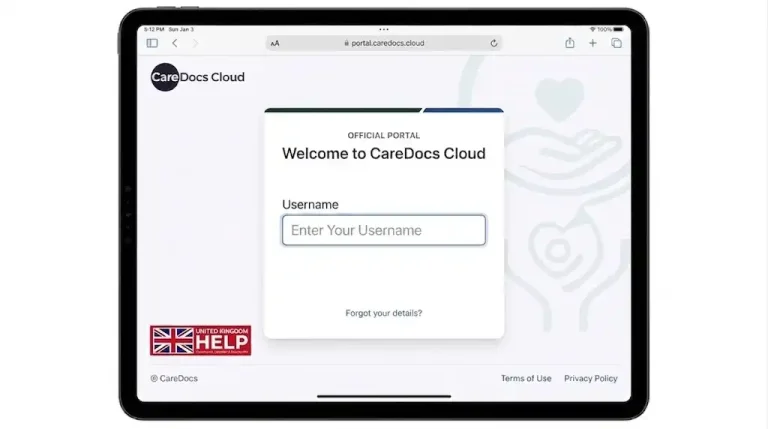
- Use your personal CareDocs username.
- Do not use another staff member’s account.
- Keep your login details private.
Step 4: Enter Your Password
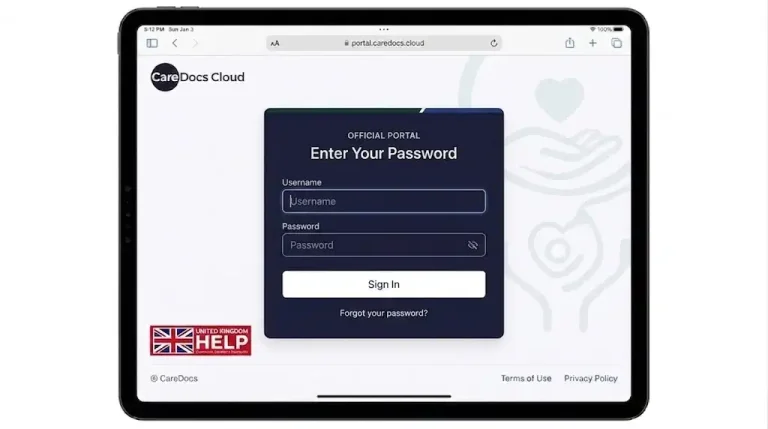
- Type your personal password.
- Check capital letters and special characters.
- Never share your password with colleagues.
Step 5: Select Login
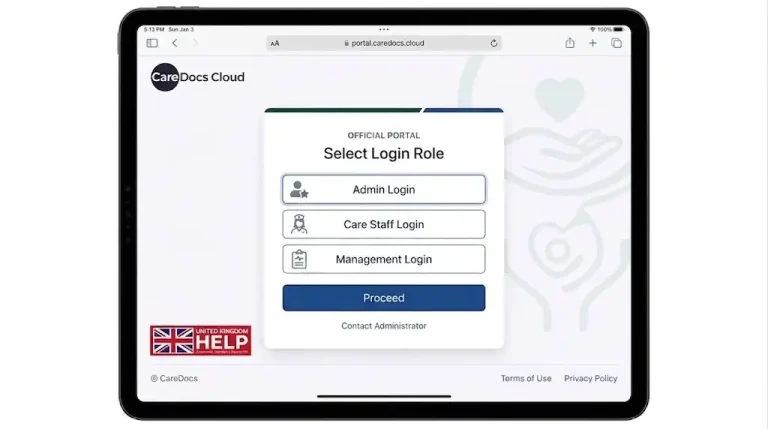
- Submit your login details.
- Wait for the portal to process them.
- Complete any additional verification shown on screen.
Quick Tip
Check your Home ID first if login fails. An incorrect Home ID can prevent access even when your username and password are correct.
What Happens After You Sign In?
Once authorised access has been established, the CareDocs Portal can become a central workspace for day-to-day care documentation. The supplied information highlights three important areas: digital care planning, point-of-care recording, and risk assessment with body mapping.
These areas have different purposes but work together. A care plan explains a person’s current needs and the care expected, while daily records document what has actually happened. Monitoring and risk records can provide further information when required.
The value of the system depends heavily on the quality and timeliness of the information staff enter. A digital record is only useful when the information remains accurate and reflects the person’s current circumstances.
Person-Centred Care Planning
Care planning is one of the core functions described in the supplied material. Person-centred profiles may contain information about an individual’s health, preferences, communication requirements and life story.
Care plans can also be reviewed and amended when needs change. Examples mentioned in the source include changes involving mobility, medication or diet.
This makes regular review important. Staff should work according to their organisation’s procedures and ensure that information they enter accurately reflects the care being provided.
Why Daily Recording Matters
The CareDocs Portal can support recording at or close to the point where care takes place. The supplied material gives examples including personal care, meal intake and social activity.
Recording information promptly can help reduce reliance on memory and provide colleagues with a clearer picture of what has taken place during a shift. This is particularly useful when several members of staff contribute to the same person’s care.
Handover information can also help outgoing and incoming teams communicate relevant details. However, staff should always follow their organisation’s specific handover and reporting procedures.
When CareDocs Login Fails
A failed CareDocs Portal login does not automatically mean the service is unavailable. Start with the basics:
The supplied guidance recommends contacting the care home’s System Administrator or Registered Manager if you have forgotten your Home ID, username or password.
For technical support, the supplied material identifies CareDocs Technical Support: 0330 056 3333. It also identifies [email protected] for personal-information enquiries.
Protecting Your CareDocs Account
Because the portal can contain confidential care information, account security should be treated as part of everyday professional practice.
Keep your password private and never give your credentials to another member of staff. Use your own named account and make sure you are working through the legitimate CareDocs website before entering sensitive login information.
It is also sensible to follow your organisation’s rules for locking or signing out of devices when you finish using them. This is especially important on shared computers or devices used across shifts.
Security reminder: If you cannot remember your login details, ask an authorised manager or administrator for help rather than borrowing another person’s account.
Recording Care at the Right Time
One of the most useful aspects of the CareDocs Portal is point-of-care recording. Entering relevant information soon after care has been delivered can reduce the risk of forgetting important details or trying to reconstruct events much later.
Daily documentation may cover areas such as personal care, meals, activities and other information required by the person’s care arrangements.
A sensible routine is:
Deliver the care → record the relevant details → review the entry → move on to the next task.
This does not mean every action needs a lengthy note. The aim is to create an accurate, useful record without unnecessary documentation.
Keep Notes Objective
Professional care records should describe what happened rather than what someone assumes happened. Clear and factual wording allows another authorised member of staff to understand the situation without having to interpret personal opinions.
For example, record relevant observations, care provided and information required by the organisation’s procedures. Avoid unsupported conclusions, emotional language or abbreviations that could be misunderstood.
The supplied guidance stresses concise, factual and respectful documentation as part of good record quality.
Food, Fluid and Other Monitoring Records
Monitoring information can be particularly important when staff need to understand changes in nutrition or hydration. The supplied CareDocs material identifies food and fluid recording as examples of routine monitoring.
One route provided in the source is:
Select Resident → Charts & Monitoring → Log Intake
The purpose is to maintain a consistent record of relevant intake. Staff should enter information promptly and follow any thresholds, escalation requirements or additional documentation rules established by their organisation.
Monitoring records should complement the person’s care plan rather than being treated as isolated information. If recorded observations indicate a concern, staff should use the appropriate internal reporting or escalation process.
Understanding Risk Assessments
The CareDocs Portal may also support structured assessments used to record and monitor risks. The supplied material refers to areas such as falls, skin integrity and nutrition.
Examples include:
The appropriate assessment depends on the person’s circumstances and the procedures followed by the care organisation. Records should be kept relevant to current needs and updated through the correct review process when circumstances change.
Why Structured Monitoring Helps
A structured assessment gives staff a consistent way to record information. It can also make important changes easier to identify over time. However, a score or assessment should not be considered separately from the wider care record. Staff should follow the relevant professional and organisational procedures when an assessment identifies a concern.
Using Body Mapping for Visual Information
Body mapping can provide another way to document the location of observations such as bruising, wounds, skin concerns or areas associated with topical treatment.
A visual record can make the location of an observation easier to understand, particularly when the position on the body is important. Even so, body mapping should support rather than replace any written information that the organisation requires.
If the observation is significant, unusual or potentially related to an incident or safeguarding concern, staff should use the appropriate reporting and escalation procedure.
Reporting Incidents Through CareDocs
Incident records need careful and factual documentation. The supplied quick guide gives the following route:
Dashboard → Incident Reporting → New Form
This can be used for relevant events such as accidents, falls or safeguarding concerns where the organisation’s procedures require an incident record.
When completing an incident form, focus on the information requested and avoid speculation. A professional record should distinguish between what was observed, what was reported and what action was taken.
Remember: Digital documentation does not replace an organisation’s incident, safeguarding or escalation procedure. If an event requires immediate action, follow the appropriate procedure first and complete the required digital record as directed.
CareDocs Portal Security: Protecting Confidential Information
Care records contain sensitive personal information, so protecting a CareDocs Portal account is part of responsible professional practice.
The supplied guidance advises users not to share login credentials, to lock a device when leaving it unattended and to log out when finishing a shift or stepping away from a terminal.
A useful daily security routine is:
- Keep your username and password private.
- Never use another person’s account.
- Lock the computer or mobile device when unattended.
- Log out when your shift is finished.
- Use authorised access methods and devices.
- Do not enter care information into unofficial websites or services.
- Report account or access problems through the authorised administrator.
- Follow your organisation’s data-protection procedures.
These habits reduce avoidable access risks and support the organisation’s wider privacy responsibilities.
CareDocs Portal App and Mobile Access
Searches such as CareDocs Portal app, CareDocs app download and CareDocs app login for Android may lead users to look for mobile access.
However, the supplied material does not provide enough verified information to confirm a particular Android application, app-store listing, download method or mobile login process. It would therefore be unsafe to invent those instructions.
If your care organisation provides mobile access, use the instructions supplied by the organisation or CareDocs through an authorised channel. Avoid downloading software from an unverified source.
The same security rules apply on mobile devices: protect your credentials, lock the device when unattended and only access confidential care information through an authorised environment.
Start With the Correct CareDocs Cloud Portal
If you already have an authorised CareDocs account, the safest starting point is the official CareDocs Cloud Portal:
For information about CareDocs products, services and support, use the official CareDocs website:
Using an official address matters. Care staff may work with confidential care information, so entering a Home ID, username or password into an unfamiliar website can create unnecessary security risks.
Having Trouble With CareDocs Portal Login?
A failed sign-in does not always mean your password is wrong. Work through the basics first and avoid repeatedly guessing credentials.
Check Your Home ID
The Home ID is connected with the care home or organisation using CareDocs. If you do not know the correct Home ID, your System Administrator or Registered Manager should be able to confirm it.
Do not borrow another organisation’s Home ID simply because it appears to be similar. Access details are linked to the organisation’s CareDocs setup.
Check Your Personal Login Details
If you have forgotten your username or password, contact the appropriate administrator or Registered Manager rather than trying another employee’s account.
Individual logins are important because activity within a digital care system needs to remain connected to the correct user. Sharing passwords can undermine both security and accountability.
Try Basic Browser Checks
If your credentials are correct but the portal is not behaving normally, try:
- Refreshing the login page.
- Closing and reopening your browser.
- Checking your internet connection.
- Using a current modern browser.
- Opening the portal again directly from the official address.
- Asking another authorised colleague whether they are experiencing the same problem.
If several users cannot access the service at the same time, the problem may be broader than your individual account and may need to be escalated.
Can You Register for a CareDocs Account Yourself?
Searches such as CareDocs Portal login register can cause confusion because users may expect a public registration button.
The supplied information does not describe an open self-registration system for individual care workers. Instead, access is organisation-based, with users receiving the necessary Home ID and personal credentials through their care service.
If you have recently joined a care organisation and have not received access, speak to your manager or System Administrator. Creating an unrelated account independently is unlikely to solve an organisation access problem.
CareDocs App and Android Access
Users often search for CareDocs app download or CareDocs app login for Android because mobile working is important in care environments.
The official CareDocs information indicates that mobile access is available for some care settings, including mobile access to information and recording tools for domiciliary care. However, the supplied material does not provide enough verified information to identify a specific Android app, Google Play listing or separate mobile installation process.
That means users should not rely on an unofficial app or download page.
Before installing anything, check with your employer and follow the mobile instructions provided by your organisation or CareDocs. Make sure the device itself is protected with an appropriate screen lock, and never enter work credentials into an application unless its source has been verified.
Protecting Your CareDocs Account and Care Information
Care records can contain sensitive personal information, so security should be treated as part of everyday care practice.
The supplied CareDocs privacy information states that CareDocs.Cloud uses Azure SQL databases with encryption at rest and that communications between users and its servers are encrypted. It also places responsibility on users to keep usernames and passwords confidential.
Good security habits still matter even when technical protections are in place.
Use your own account. Do not let another member of staff work under your username.
Secure unattended devices. Lock a computer, tablet or mobile device whenever you leave it, following your organisation’s procedures.
Keep credentials private. Do not share passwords through informal messages or leave them visible near a workstation.
Use the official portal. Avoid entering credentials into links received from unknown sources.
Log out appropriately. When your organisation requires it, sign out at the end of your shift or when leaving a shared terminal.
Preparing Records for Reviews and Audits
Good digital care records should reflect normal working practice rather than being created hurriedly before an inspection.
Staff can support this by recording information promptly, keeping entries factual and updating relevant care documentation when circumstances change. Required monitoring, incidents, reviews and handover information should be completed through the correct process.
A useful question before ending a shift is: Does the record accurately show the care and important events that took place?
If the answer is no, identify what remains outstanding and follow your organisation’s procedure for completing or escalating it.
CareDocs Portal End-of-Shift Checklist
Before finishing your shift, take a moment to check the essentials:
Managers can add a second review by checking available reports, alerts and dashboards for incomplete documentation, outstanding actions or other areas requiring attention.
Common CareDocs Tasks
The exact navigation can vary according to system configuration, so the routes below should be treated as practical examples from the supplied CareDocs guidance rather than universal instructions.
|
Task |
Example route |
|---|---|
|
Add a daily note |
Resident → Daily Recording → Add Note |
|
Record food or fluids |
Resident → Charts & Monitoring → Log Intake |
|
Review a care plan |
Resident → Care Plans → Select Category |
|
Report an incident |
Dashboard → Incident Reporting → New Form |
If a menu or option does not appear, do not assume that your account is faulty. Access may depend on your role, permissions or the way your organisation has configured CareDocs.
Frequently Asked Questions
Conclusion
Using the CareDocs Portal properly means keeping records accurate, protecting your login details and dealing with issues promptly. Always use your own account and secure your device when working with care information. For login problems, contact your System Administrator or Registered Manager. Use the official CareDocs Cloud Portal for sign-in and the official CareDocs website for product information, support and other resources.