
Spellingframe is an online spelling resource designed to help primary school children practise English spelling through word lists, interactive activities and tests. It can be useful for parents supporting learning at home and teachers looking for ways to organise spelling practice around different year groups.
The platform focuses on spelling patterns and vocabulary commonly taught in UK primary education. Instead of asking children to memorise long lists without context, learners can work on particular spelling rules, listen to words and practise recognising the correct letter patterns.
You can visit the official website at Spellingframe.co.uk to explore the available resources.
Whether you need help with Spellingframe login, Year 3 and Year 4 spelling practice, interactive games or classroom activities, this guide explains how to get started, use the learning materials and deal with common access problems.
What Is Spellingframe and Who Can Use It?
Spellingframe is an educational website centred on spelling practice. Its resources are intended to support children’s understanding of English words, spelling patterns and curriculum-related vocabulary.
The platform may be useful to several groups:
The most effective way to use Spellingframe is to concentrate on one spelling pattern at a time. A child who struggles with a particular suffix, for example, may benefit more from targeted practice than from repeatedly attempting unrelated word lists.
Before relying on the website for a specific assignment, check that the selected activity matches the child’s current schoolwork.
How to Access Spellingframe Login
Getting started depends on whether you are using the website independently or accessing resources provided through a school.
Visit the official Spellingframe website and look for the relevant access or sign-in options. Follow the instructions displayed on the website rather than using an unverified login page.
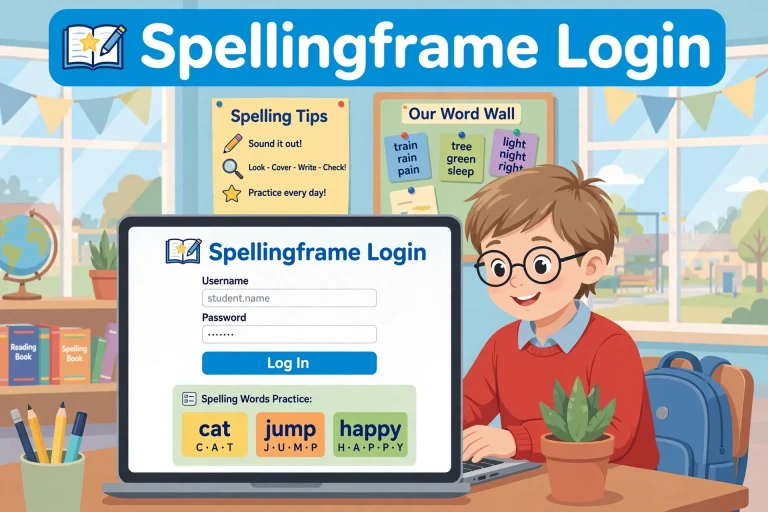
Student access
If your school has arranged access to Spellingframe, your teacher or school administrator may provide the information needed to sign in.
Follow these steps:
The exact login process can depend on the access arrangement provided by your school. Do not assume that every pupil needs a separate account or that the same login method applies to all users.
If you cannot sign in: Check your spelling, capital letters and password first. If your school supplied the credentials, ask your teacher or school administrator to confirm that they are correct.
Teacher access
Teachers should begin at the official website and review the available educator options.
If registration or a school licence is required for the resources you want to use, check the current terms before proceeding. The available registration methods and account features should be confirmed directly with Spellingframe.
Once access has been established, decide which spelling patterns your pupils need to practise. A clear plan makes it easier to connect online exercises with classroom teaching.
Using Spellingframe for Year 3 and Year 4 Spelling
Children in different year groups develop spelling skills at different rates. Choosing appropriate words and rules helps keep practice relevant without making the work unnecessarily difficult.
Spellingframe is commonly searched for alongside year-group terms such as Spellingframe Year 3, Spellingframe Year 4 and Spellingframe Year 3 and 4. These searches generally reflect a need for age-appropriate spelling exercises.
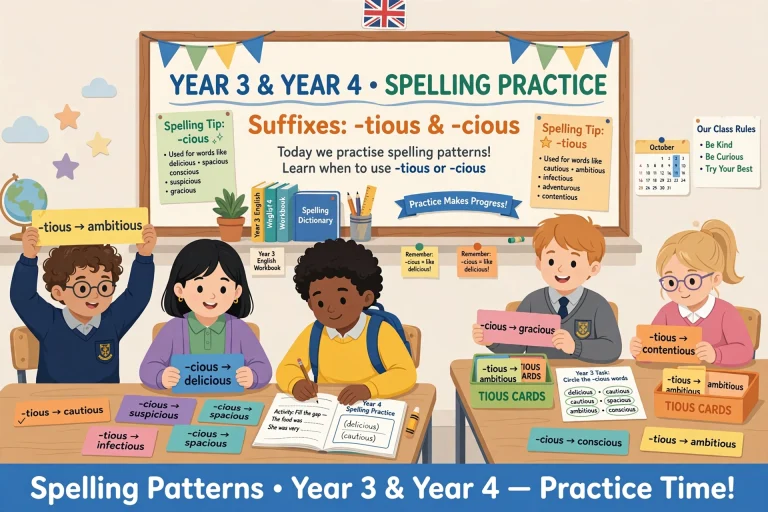
Year 3 spelling practice
Year 3 pupils can benefit from revisiting familiar spelling patterns before moving on to more challenging words.
Useful areas to practise may include:
Parents can support this learning by asking children to read a word, say it aloud, spell it and then use it in a sentence.
Year 4 spelling practice
Year 4 learners can build on their existing knowledge by paying closer attention to word structure and less familiar spelling patterns.
Depending on the child’s curriculum and current learning objectives, practice may include:
Practical tip: Choose activities based on the spelling rules the child is currently learning at school. A year-group label can be a useful starting point, but it should not replace the teacher’s guidance.
For the correct curriculum requirements, consult the official English programmes of study for England.
Understanding Spelling Rules and Difficult Word Patterns
Learning a spelling rule helps children understand why words are written in a particular way. This is more useful in the long term than memorising each word without recognising any connections.
When browsing spelling resources, look for activities organised around a particular pattern or word group.
Prefixes and suffixes
A prefix is added to the beginning of a word, while a suffix is added to its end. Both can change a word’s meaning or grammatical form.
For example, adding un- to kind creates unkind. Adding -ed to many regular verbs creates a past-tense form, as in jumped.
Children should also learn that some suffixes require changes to the original word. The correct spelling depends on the word and the relevant rule, so examples are important.
Words ending in -tious and -cious
The endings -tious and -cious can be challenging because they sound similar in many words.
Examples include:
Ask the child to group words by their endings and look for patterns. They can then practise writing each word from memory and checking the result.
Silent letters and tricky words
Some English words contain letters that are not pronounced clearly in everyday speech. Others have unusual spelling patterns that children need to learn through repeated exposure.
A useful revision routine is to read the word, identify the difficult part, cover the spelling, write it from memory and check the answer. Revisit mistakes after a short break to see whether the correct spelling has been remembered.
Spellingframe Games: Making Revision More Engaging
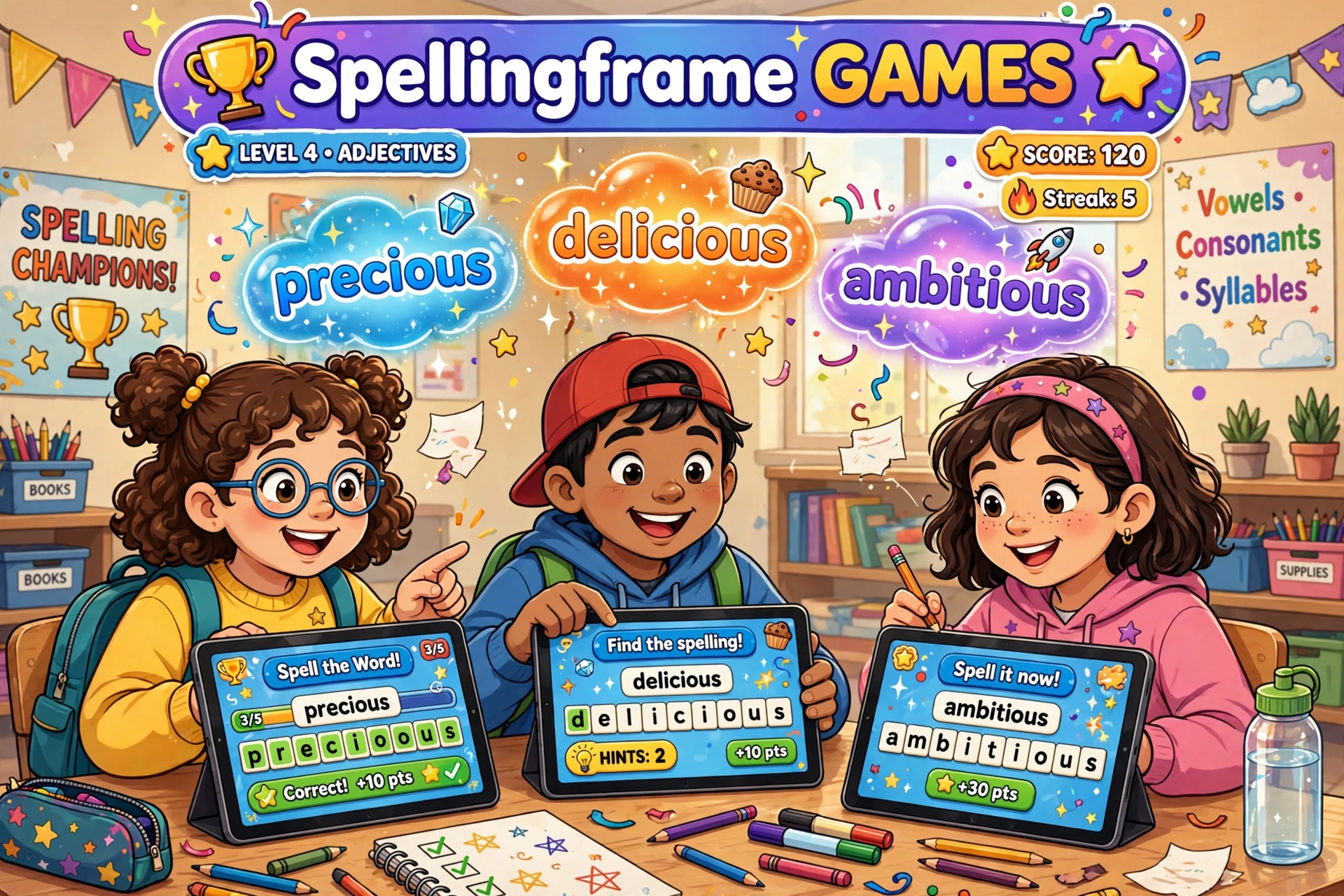
Spelling practice does not have to mean copying the same word several times. Interactive activities can provide variety and encourage children to return to difficult words.
Spellingframe games are a common search topic because parents and pupils often want a more engaging alternative to traditional worksheets.
Depending on the activities currently available on the website, learners may be able to select exercises linked to particular spelling patterns and practise words through interactive tasks.
How to make the most of spelling games
Use the following approach to keep practice focused:
Games work best when they support a clear learning goal. A child may enjoy completing an activity, but the real test is whether they can spell the words correctly afterwards without help.
Are there Spellingframe apps or AI features?
Searches for Spellingframe app, Spellingframe AI and mobile access suggest that some users are looking for ways to practise on phones or tablets.
However, an official standalone mobile app or specific AI-powered feature should not be assumed to exist simply because these terms appear in search results. Check the official website for current information before downloading anything or paying for an additional service.
If you want to use Spellingframe on a mobile device, try the official website in your browser and follow its displayed instructions. Avoid unofficial downloads that request unnecessary personal information or account credentials.
Taking Spelling Tests and Reviewing Mistakes

Practice helps children become familiar with spelling patterns, while testing can show whether they can remember those patterns independently.
If the website offers a test for your selected word list, use it after the child has completed some revision.
A productive spelling test routine looks like this:
If audio or sentence-based prompts are provided for an activity, encourage the child to listen to the whole prompt before answering. Context can help distinguish words that sound similar.
What should you do after a test?
A low score is not a reason to abandon a topic. It can show which parts need more attention.
Divide incorrect answers into groups, such as suffix mistakes, missing letters and words that were difficult to remember. This makes the next revision session more focused.
For example, if a pupil repeatedly misspells words ending in -cious, practise that pattern separately before returning to a mixed spelling test.
Teachers and parents should also distinguish between a child who understands a rule but makes occasional typing mistakes and one who has not yet learnt the pattern.
Tracking Spelling Progress at Home and School
Regular review helps children recognise improvement and identify skills that still need work. The best way to monitor progress depends on the access and reporting features available to your account.
For teachers
Teachers can use spelling activities alongside classroom assessments to identify common difficulties and plan follow-up lessons.
If the selected Spellingframe account includes assignment or reporting features, check the available records to understand which activities pupils have completed and where further practice may be useful.
Useful questions to ask include:
Do not assume that live leaderboards, automated homework reports or detailed class analytics are included in every account. Confirm the actual features available before building a teaching workflow around them.
For parents
Parents do not need a complicated tracking system to support spelling development.
Keep a small notebook or digital list of difficult words. Record the date, the spelling pattern and whether the child could write each word independently.
Review the list regularly and remove words from the main practice group once the child can spell them confidently over several sessions. Bring them back occasionally to check long-term retention.
Spellingframe Pricing and Account Options
Before purchasing access, check which resources are available for free and which require payment. The cost and terms may depend on the licence type, account arrangement and current offer.
The original information supplied for this article listed the following prices. These figures have not been independently verified as current prices, so treat them as historical or unconfirmed figures rather than a live price list.
| Licence type | Intended users | Price stated in the original information |
|---|---|---|
| Individual spelling licence | Parents, tutors or individual learners | £10 per year |
| Combined individual licence | Individual users wanting spelling and maths resources | £25 per year |
| School spelling class licence | Teachers and classrooms | £30 plus VAT per class, per year |
| Combined school licence | Schools wanting combined maths and spelling access | £50 plus VAT per class, per year |
The original information also stated that licences did not automatically renew and that users received a reminder before expiry. This arrangement should be checked against the current terms before making a purchase.
What to check before paying
Visit Spellingframe.co.uk and confirm:
For schools, it is worth comparing the available options against the resources teachers will actually use. A combined package may be unnecessary if the school only needs spelling practice.
Common Spellingframe Problems and How to Resolve Them
Access problems can interrupt revision, but many can be investigated without changing account settings or purchasing another licence.
| Problem | What to try |
|---|---|
| Login details are rejected | Check the username, password and capitalisation. Ask the school administrator to confirm the credentials if necessary. |
| The website will not load | Check your internet connection and open the official website again. |
| An activity is unavailable | Confirm that the resource is accessible through your current account and licence. |
| A page behaves unexpectedly | Try refreshing the page or using an up-to-date browser. |
| Mobile access is difficult | Open the official website in your device’s browser and check its displayed instructions. |
| You cannot find a particular spelling list | Search the available year groups or spelling categories and ask your teacher for guidance if the resource is school-assigned. |
| You have a payment or licence query | Review the current terms and use the contact information published on the official website. |
If the problem continues, explain what happens, which device and browser you are using, and any error message displayed. This information can help the relevant support contact identify the issue.
Never share your password in a public forum or send account credentials to an unofficial support service.
Frequently Asked Questions About Spellingframe
Conclusion
Spelling improvement comes from understanding word patterns, practising regularly and learning from mistakes. Spellingframe can be a useful part of that process when its resources match a child’s learning needs.
Start with a manageable spelling topic, use an appropriate activity, and finish by writing the words independently. Parents can reinforce the same patterns at home, while teachers can use the results of practice and classroom assessments to decide what pupils should learn next.
Before relying on a particular login method, app, reporting feature or subscription price, verify the details on the official website. This helps you choose the right resources without wasting time or paying for features you may not need.
Read more