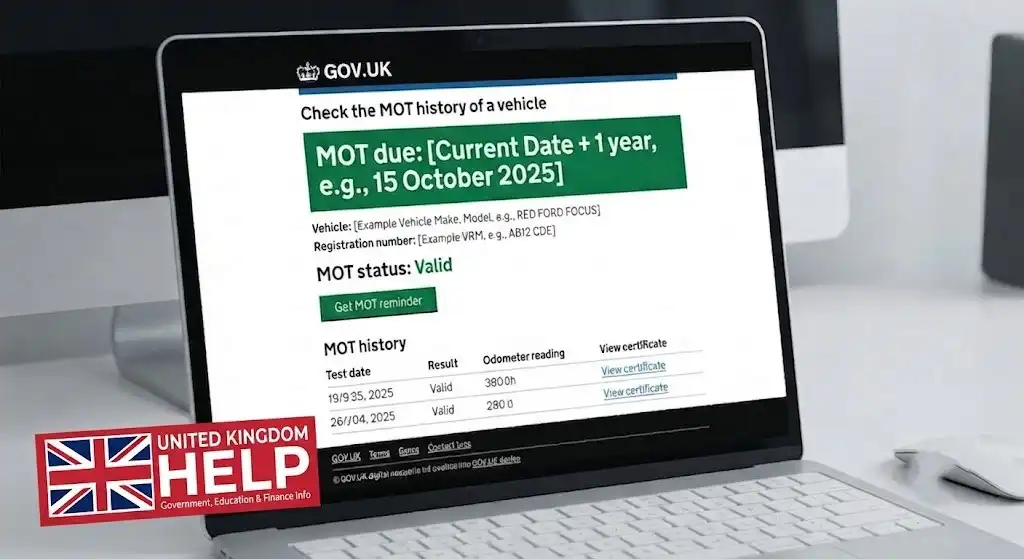
MOT Check GOV 2026: Status, Expiry & MOT History

Checking a vehicle’s MOT is one of the quickest ways to understand its current test position and review important details from previous tests. Whether you own the car or are considering buying a used vehicle, an MOT Check GOV search can help you confirm the current MOT status, see the MOT due date, and review available MOT history.

For a broader picture, an MOT check can also help you compare previous results, recorded mileage and any issues or advisories associated with earlier tests.Visit our Homepage for more information.

What is MOT Check GOV?

An MOT Check GOV helps you quickly understand a vehicle’s current MOT position and review important information from its testing history. Using the vehicle registration number, you can check the current MOT status, confirm the MOT due date, and explore previous pass and fail results, recorded mileage, advisories and other available test details. This guide also explains what an MOT covers, how MOT certificates work, the difference between an MOT and a vehicle service, and what to look for when buying a used car. By reviewing the complete MOT history, you can spot useful patterns and make more informed decisions.

MOT Check GOV: How to Check MOT History Online

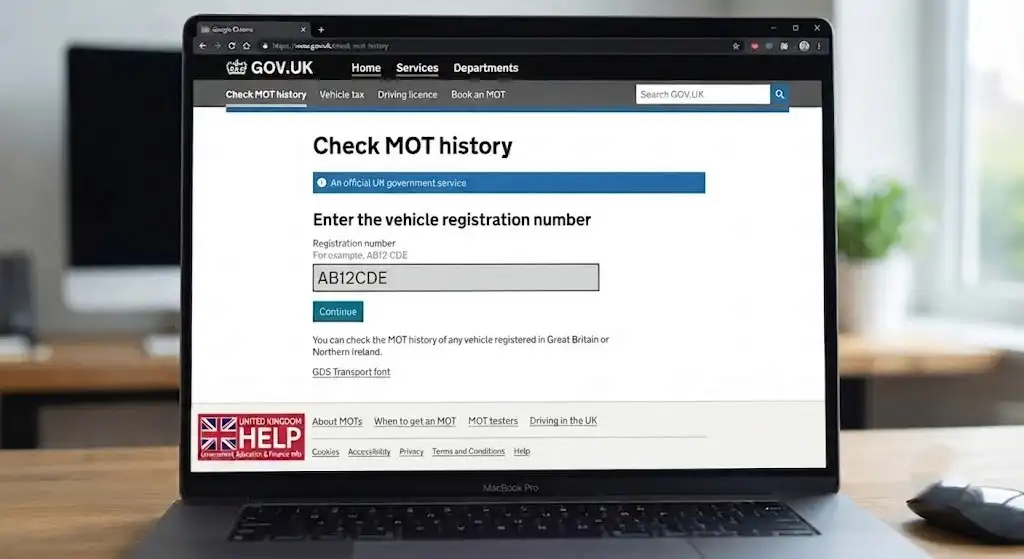
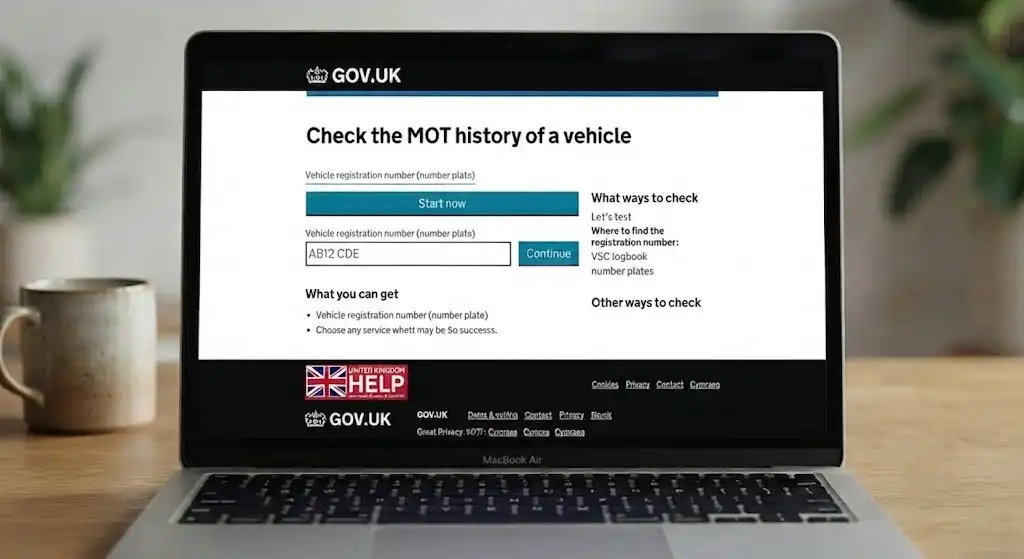
Checking your MOT information online generally requires the vehicle registration number. The process is straightforward:
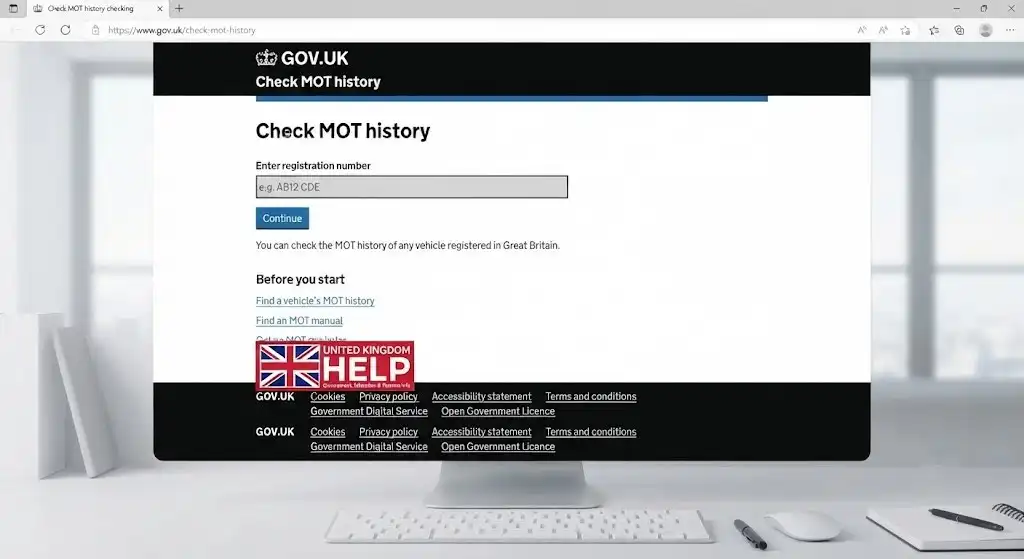
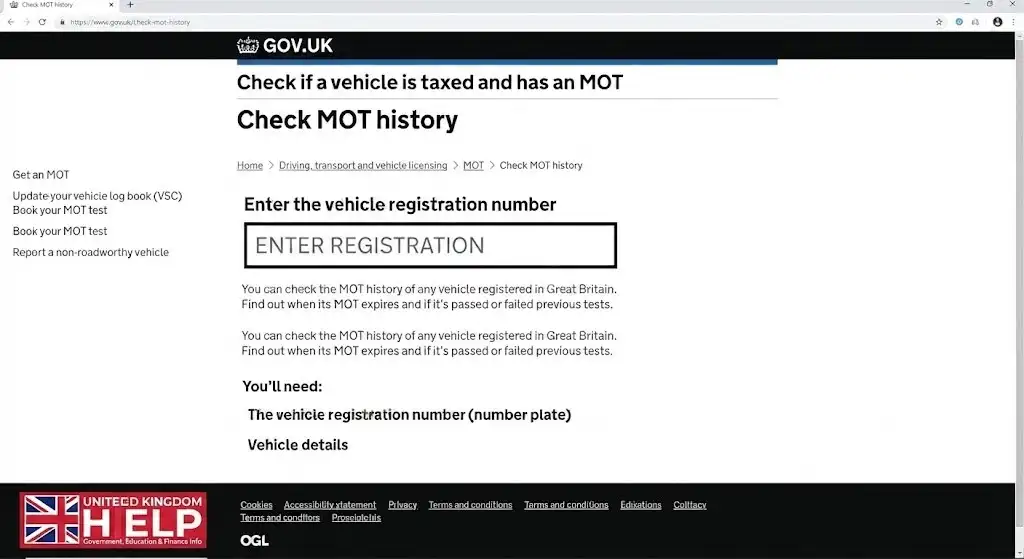
  • Open the official GOV.UK MOT checking service.
MOT Check GOV
  • Enter the vehicle registration number when requested.
  • Submit the search.
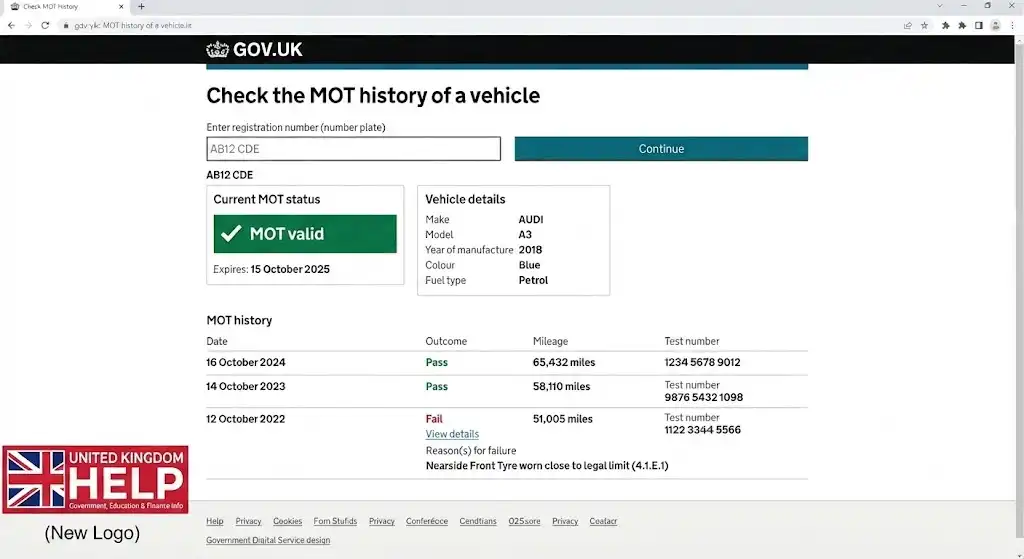
  • Review the current MOT status.
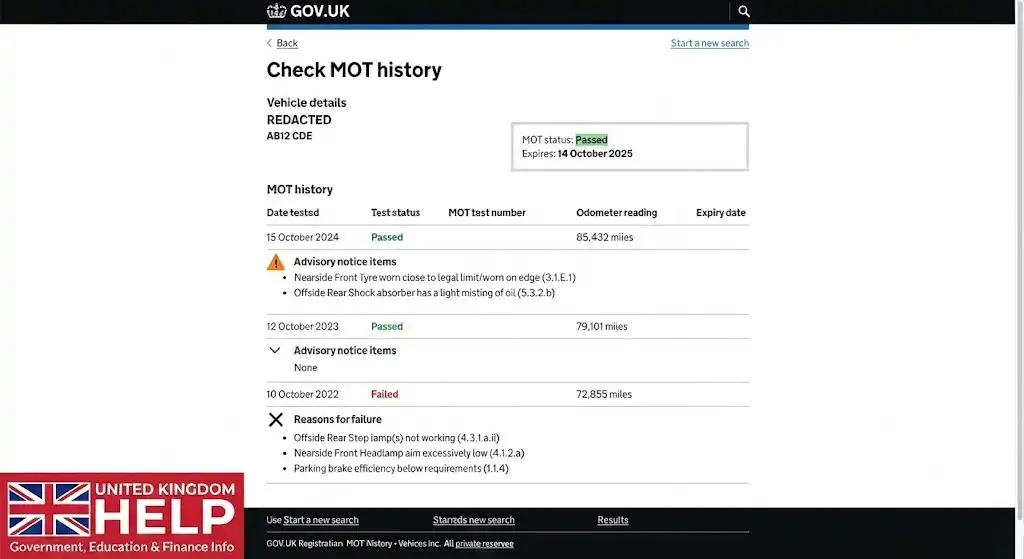
  • Check previous MOT results and available history.
  • Look at recorded mileage, failures and advisories where available.
  • Note the next MOT due date.

This gives you a practical way to check MOT online without relying solely on paperwork supplied by the vehicle owner or seller.

What Can You Find With an MOT Check?

An MOT history contains more than simply a pass or fail result. Depending on the available vehicle data, the check can help you understand how the car has performed over time and whether there are details worth investigating further.

MOT History and Previous Results

Review previous MOT tests to see when they took place, whether the vehicle passed or failed, and what information was recorded with the result. Looking at several tests together can provide more useful context than checking the latest result alone.

Current MOT Status

The current status helps you establish whether the vehicle has a valid MOT recorded and gives you a clearer idea of its present test position.

MOT Due Date

Knowing the next MOT due date makes it easier to keep track of when another test may be required. If you’re buying a used car, this date can also be useful when assessing the vehicle’s immediate maintenance requirements.

Pass and Failure Record

A history of previous passes and failures can show how consistently a vehicle has met MOT requirements. A failure does not automatically mean a car is unsafe or poorly maintained, but repeated failures or recurring problems may deserve closer attention.

Recorded Mileage

Mileage recorded during MOT tests can be useful when checking whether the vehicle’s history appears consistent. Comparing different recorded readings may help you identify information that should be investigated before purchasing a car.

MOT History Analysis

Raw MOT records can sometimes be difficult to interpret when viewed individually. Bringing the available results together makes it easier to spot recurring advisories, previous failures or other patterns that may be relevant when assessing a vehicle.

Useful tip: Don’t judge a car from its latest MOT result alone. Previous tests can reveal issues that may no longer appear on the most recent certificate.

How Does an MOT History Check Work?

The process starts with the vehicle registration number. Once the registration is entered into an MOT checking service, available vehicle information can be displayed so you can review the current status and previous test records.

An MOT check is particularly useful when you’re looking at a second-hand vehicle because it allows you to examine the car’s testing record rather than relying only on what a seller tells you.

For official records, the GOV.UK service is the appropriate place to check a vehicle’s MOT history.

Why Should You Check Your MOT Status?

An MOT is designed to assess whether a vehicle meets required safety and environmental standards at the time of its test. Checking the record gives you a useful snapshot of previous test outcomes and can highlight areas that may need attention.

For vehicle owners, checking the MOT status helps avoid overlooking an upcoming test. For buyers, reviewing the MOT history can provide additional evidence when deciding whether a used vehicle is worth considering.

However, an MOT record should not be treated as a complete mechanical inspection. A car can pass an MOT and still have faults that are outside the scope of the test, so a professional inspection may still be worthwhile when buying a used vehicle.

What Does an MOT Test Check?

An MOT test examines specific parts of a vehicle to determine whether it meets the required standards. The inspection can cover areas such as:

  • Brakes and braking performance
  • Lights and signalling equipment
  • Steering components
  • Suspension
  • Vehicle structure
  • Seatbelts and restraints
  • Exhaust and emissions
  • Other safety-related components

The exact requirements depend on the vehicle and the MOT test class. The test is focused on roadworthiness and environmental requirements rather than providing a full mechanical health assessment.

MOT Certificate: What Does It Mean?

An MOT certificate records the outcome of an MOT test. It can provide useful evidence of the vehicle’s latest test result, but it should be considered alongside the wider MOT history.

If you’re checking a used car, compare the certificate information with the vehicle’s recorded MOT history and mileage. Any differences or unexpected information are worth clarifying before you make a purchase.

Booking an MOT Test

If your vehicle needs a new MOT, you can arrange a test through an authorised MOT test centre. GOV.UK provides information about finding and booking an MOT test.

Before booking, check the vehicle’s current MOT position so you know whether the test is already due or whether you are arranging one in advance.

If you are using a third-party vehicle service, make sure you understand what information or booking service it provides and whether additional charges apply.

MOT Test vs Vehicle Service

An MOT and a service are not the same thing.

The MOT is a regulated test that checks specific safety and environmental requirements. A service is broader and is intended to maintain the vehicle and identify mechanical or maintenance issues.

For example, a vehicle could pass its MOT but still benefit from servicing because the MOT does not replace routine maintenance. Keeping both up to date gives you a better approach to vehicle care.

MOT Test

Vehicle Service

Checks specified safety and environmental requirements

Focuses on maintenance and overall vehicle condition

Required at applicable intervals by law

Recommended as part of routine maintenance

Produces an MOT result

Produces a service record

Does not replace servicing

Does not replace the MOT

What Should You Look For in MOT History?

A single failure is not necessarily a reason to reject a vehicle. The more useful approach is to look for patterns.

Pay particular attention to:

  • Repeated failures
  • Recurring advisories
  • Significant changes in recorded mileage
  • Frequent tests within short periods
  • Problems appearing repeatedly across several years
  • A very limited or unexpected history

These details do not automatically prove that a vehicle is unsuitable. They simply give you areas to investigate before making a decision.

Is an MOT Check Enough When Buying a Used Car?

An MOT Check GOV search is a useful starting point, but it should not be the only check you make before buying a used vehicle.

The MOT record can tell you about previous tests, but it does not provide a complete picture of the car’s mechanical condition, ownership history or every repair carried out during its lifetime.

For a more informed decision, consider checking:

  • MOT history
  • Current MOT status
  • Recorded mileage
  • Vehicle tax position
  • Service history
  • Previous repairs
  • Vehicle identification details
  • Overall mechanical condition

A test history is most valuable when combined with a physical inspection and other relevant vehicle records.

Quick MOT Check Summary

If you only need the essentials, remember these points:

  • Use the vehicle registration number to begin an online search.
  • Check the current MOT status.
  • Confirm the MOT due date.
  • Review previous MOT history rather than looking only at the latest result.
  • Compare recorded mileage across tests.
  • Look for repeated failures or advisories.
  • Treat an MOT certificate as evidence of the test result, not as a full vehicle inspection.
  • Use the official GOV.UK service when you want to access government MOT records.

MOT Guides Worth Checking

Once you have checked the basic MOT information, you may also want to explore questions about when a test is due, whether an MOT can be carried out early, driving without a valid MOT, MOT exemptions, test classes, common failure reasons, electric vehicles and the difference between an MOT and a service.

These topics are especially useful if you’re preparing a vehicle for its next test or researching a used car before purchase.

Frequently Asked Questions

No. A standard MOT certificate does not remain valid for two years. For most vehicles that require an MOT, the certificate normally lasts for 12 months from the date the test is carried out.

Once a vehicle reaches the age at which MOT testing becomes mandatory, it must usually be tested every year to continue meeting the legal requirements for use on public roads. In Great Britain, this generally applies when a vehicle is three years old, while the rules differ in Northern Ireland.

What You Need to Know About MOT Validity

  • MOT tests are normally required annually: A valid MOT generally covers your vehicle for one year, after which another test will be needed.
  • You may book an MOT before the current certificate expires: In many cases, you can have the vehicle tested up to one month minus one day before its expiry date and still preserve the existing renewal date.
  • Some vehicles do not need an MOT immediately: Newer vehicles are generally exempt until they reach the required testing age.
  • Certain older vehicles may qualify for an exemption: Some historic vehicles over 40 years old do not require a regular MOT, subject to the relevant rules and conditions.

So, while there are exemptions for particular types of vehicles, a normal car does not receive a two-year MOT certificate.

To check whether a vehicle currently has a valid MOT and find its expiry date, you can use the official GOV.UK MOT status checker.

Yes. You can check a UK vehicle’s MOT information online for free by using its registration number (number plate). An MOT check can give you a useful overview of the vehicle’s current test status as well as information recorded during previous MOT tests.

Check MOT Information Online

The official GOV.UK MOT history service allows you to search for a vehicle using its registration number. Once you enter the number plate, the available MOT information can be viewed online.

You can use the official GOV.UK service here:

How to Check a Vehicle’s MOT Details

Checking the information is straightforward:

  1. Visit the official GOV.UK MOT history checking service.
  2. Enter the vehicle’s registration number.
  3. Submit the search to view the available MOT details and history.

What Can You Find in an MOT Check?

An MOT history search can provide several useful details about a vehicle, including:

  • Current MOT status – Check whether the vehicle currently has a valid MOT or whether it has expired.
  • Next MOT due date – See when the vehicle is expected to need its next MOT test.
  • Previous MOT results – Review records of earlier MOT passes and failures.
  • Advisories and failure information – Find details about issues identified during previous tests, including advisory items and reasons for failure.
  • Recorded mileage – Compare mileage readings recorded during earlier MOT tests.

Checking these details can be particularly useful when you already own the vehicle or when researching a used car before making a purchase. Reviewing the MOT history may help you understand how the vehicle has performed in previous inspections and identify issues that have been recorded over time.

An MOT is designed to check whether a vehicle meets the required road safety and environmental standards. A car can receive a failed result when the inspection identifies major or dangerous defects that need attention.

Some MOT problems are easy to spot before your appointment, while others may only become apparent during the inspection. Checking a few key areas in advance can help you identify common issues.

Common Problems That Can Lead to an MOT Failure

Lights and indicators
Faulty bulbs, damaged light covers, indicators that do not work correctly, and poorly aligned headlights can all cause problems during an MOT. Make sure the vehicle’s lights are operating properly before the test.

Braking system
Your brakes must work effectively and safely. Excessively worn brake components, damaged discs, poor brake performance, or a parking brake that does not operate correctly may result in a failed MOT.

Tyres and wheels
Tyres must meet the legal requirements for condition and tread depth. A tyre with insufficient tread, serious cuts, bulges, or visible internal cords could lead to an MOT failure. In the UK, the minimum legal tread depth is generally 1.6mm across the required central area of the tyre.

Suspension components
Problems such as damaged springs, worn suspension joints, or leaking shock absorbers may be identified during the test. These faults can affect how safely and effectively the vehicle handles on the road.

Windscreen, wipers and washers
The driver must have a sufficiently clear view of the road. Damage to the windscreen in a critical viewing area, ineffective wiper blades, or washers that do not work properly can create an MOT issue.

Warning lights on the dashboard
Certain illuminated warning lights can indicate faults that require investigation. A warning relating to important vehicle systems may affect the MOT result, particularly where it points to a significant safety problem.

A Quick Check Before Your MOT

Before taking your vehicle for its test, it is worth checking the lights, tyres, windscreen wipers and washer fluid yourself. These simple checks may help you find straightforward problems before the MOT inspection.

Remember, the official test result depends on the defects found by the MOT tester. If major or dangerous defects are recorded, the vehicle will fail its MOT and the necessary repairs should be addressed.

Yes. You can check a vehicle’s MOT status and MOT history online without paying a fee.

For a standard MOT check, you can use the official government MOT service on GOV.UK. Several motoring websites also provide free registration-based MOT checking tools, allowing drivers and potential buyers to access key MOT information quickly.

A vehicle registration number is usually all you need to begin the search.

What Can You See With a Free MOT History Check?

A free MOT check can provide useful information about a vehicle’s testing record, including:

  • Its current MOT status
  • The date its MOT expires or is due
  • Previous MOT pass and fail results
  • Mileage recorded during MOT tests
  • Advisory items reported by the tester
  • Reasons why the vehicle failed previous tests

This information can be particularly useful when checking your own vehicle or researching a used car before making a purchase.

No. In normal circumstances, you cannot legally continue driving your vehicle two days after its MOT expiry date. Unlike some documents or services, an MOT does not come with an automatic grace period.

There is, however, a limited exception. You may drive the vehicle if you are travelling to a pre-booked MOT test appointment.

Keep these points in mind:

  • There is no 14-day or extra grace period after the MOT expires.
  • Driving without a valid MOT can result in a fine of up to £1,000.
  • Police cameras and ANPR systems may identify vehicles without a current MOT.
  • Insurance cover could also be affected, particularly if the vehicle is not roadworthy.

The safest option is to arrange your MOT before the expiry date and avoid unnecessary driving once it has expired.

A car from 1984 may qualify for MOT exemption under the UK’s historic vehicle rules. Generally, vehicles that are more than 40 years old can be driven without a current MOT, provided they have not been substantially modified in ways that affect their original design or safety.

However, MOT exemption does not remove your responsibility to keep the vehicle roadworthy.

Key points to remember:

  • Major modifications matter: Significant changes to the chassis, engine or other key components could affect eligibility.
  • Road safety remains essential: The car must always be maintained in a safe condition for use on public roads.
  • Historic vehicle status: Eligible vehicles may need to be placed in the appropriate historic tax class, with the required declaration completed when taxing the vehicle.

Always check the latest eligibility requirements through official government guidance before relying on an exemption.

The cost of an MOT depends on the type of vehicle being tested. For a standard car, the maximum legal MOT fee is £54.85, while a standard motorcycle can cost up to £29.65. These maximum charges are set under official UK MOT rules, although many garages offer the test at a lower price.

Common maximum MOT fees include:

  • Cars (up to 8 passenger seats): £54.85
  • Motorcycles: £29.65
  • Motorcycles with a sidecar: £37.80
  • Light vans: £54.85
  • Larger goods vehicles: £58.60

Remember that the MOT test fee does not include repair costs. If your vehicle fails and needs replacement parts or mechanical work, the garage may charge separately. Some testing stations may also provide a free partial retest when the vehicle is repaired within the permitted timeframe.

In most situations, driving on UK public roads without a valid MOT is against the law. However, there are limited circumstances where you may legally use the vehicle. For example, you can travel to a pre-arranged MOT test or take the vehicle for repairs that have already been booked.

Keep these important rules in mind:

  • You must have a genuine appointment arranged in advance.
  • Travel should be directly connected to the MOT test or authorised repairs.
  • The vehicle must remain safe and roadworthy to drive.
  • Valid insurance is still required.
  • Cars less than three years old normally do not require an MOT.

Driving without a valid MOT when no exemption applies can result in a fine of up to £1,000. More serious penalties may apply if the vehicle is considered dangerous.

A car registration number can help you identify useful information about a vehicle, but it cannot normally be used to access someone’s private personal details. Public vehicle-checking services can provide general information about a car and its current status.

You may be able to check:

  • The vehicle’s make, model and colour
  • Year of manufacture and engine details
  • Tax status and relevant expiry information
  • MOT records and vehicle history
  • Certain historical records, such as export or insurance write-off information

However, a registration search will not reveal the registered keeper’s name, telephone number, home address or the vehicle’s live location.

Keeper information may only be requested from the DVLA where there is a legitimate reasonable cause, such as a road traffic incident, an abandoned vehicle on private property, or certain legal and enforcement matters.

An MOT checklist is a useful overview of the main parts of a vehicle that are inspected during its annual MOT test. The purpose of these checks is to determine whether the vehicle meets the required road safety and environmental standards. Knowing what appears on an MOT checklist can also help drivers identify obvious problems before taking their car for testing.

Main Areas Covered During an MOT

The inspection examines many important vehicle components, including:

  • Lights and indicators: These must operate correctly and display the appropriate colour.
  • Tyres and wheels: Tyres are checked for damage, condition and the minimum legal tread depth of 1.6mm.
  • Braking system: Inspectors assess brake performance, efficiency and balance.
  • Steering and suspension: Components are examined for excessive wear, damage or unsafe looseness.
  • Windscreen and wipers: The driver’s view must remain sufficiently clear, while wipers should work properly.
  • Exhaust and emissions: The exhaust system must be secure and meet relevant emissions requirements.
  • Seats and seatbelts: Seatbelts must function correctly, and the driver’s seat should be safely adjustable.

Checking these areas beforehand can help you spot simple issues and prepare your vehicle for its MOT test.

Conclusion

An MOT Check GOV search gives you a practical starting point for understanding a vehicle’s testing record. Checking the current MOT status, MOT due date, previous results, mileage and recorded issues can help you make better-informed decisions.

For owners, regular checks make it easier to keep track of testing requirements. For used-car buyers, reviewing the complete MOT history can reveal useful patterns that may not be obvious from the latest MOT certificate alone.

Leave a Comment

Your email address will not be published. Required fields are marked *

Scroll to Top