
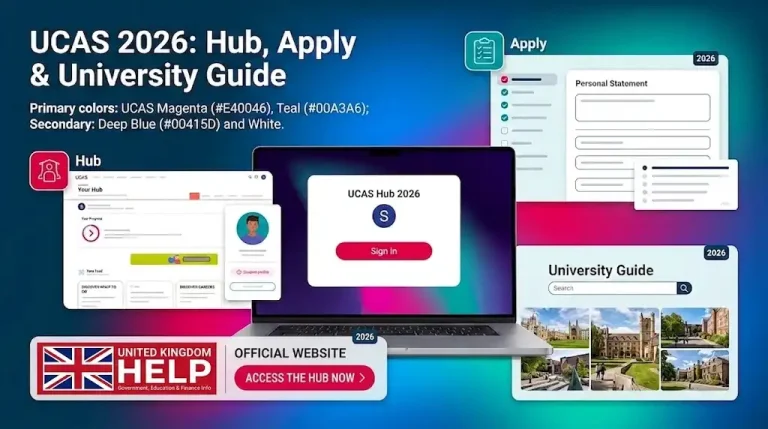
UCAS is the main starting point for many students applying to UK universities in 2026. From the UCAS Hub, you can research courses, add qualifications, select university choices and monitor application decisions. If you’re preparing for undergraduate study, creating your Hub account early can make the process easier. Use the official UCAS website to access your account and find current application guidance.Visit our Homepage for more information.
What Is the UCAS Hub?
It is the online space where students can create, organise and manage their university application. It brings key tasks together, including course research, personal details, qualifications, university choices, offers and Clearing information. Instead of completing separate undergraduate applications for each university, students can use one application to manage their selected course choices and track important admissions updates.
UCAS Login : Accessing Your Account
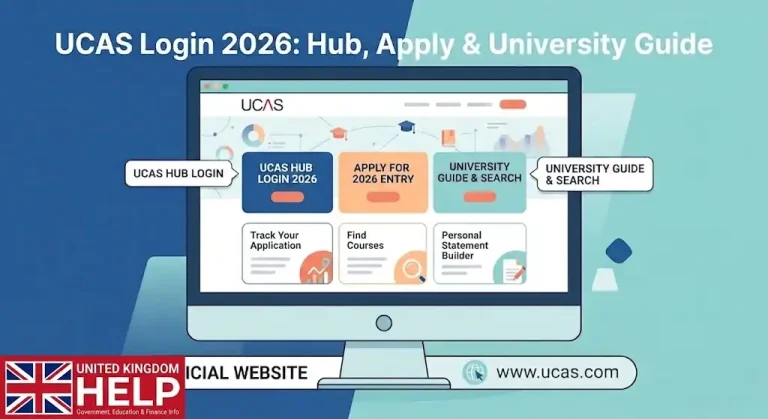
Open the official UCAS website:
Use the official website:
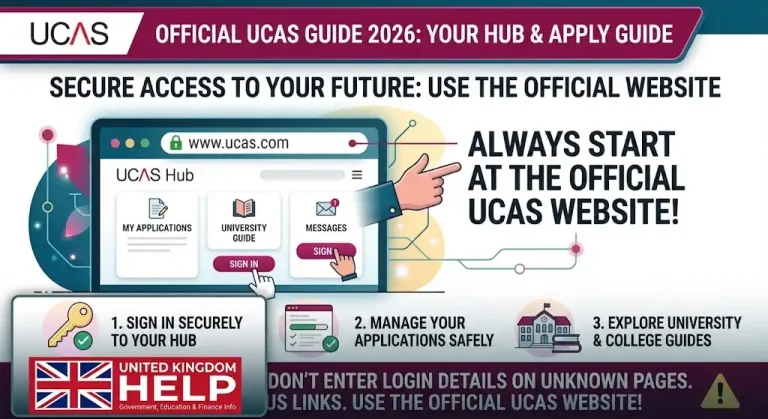
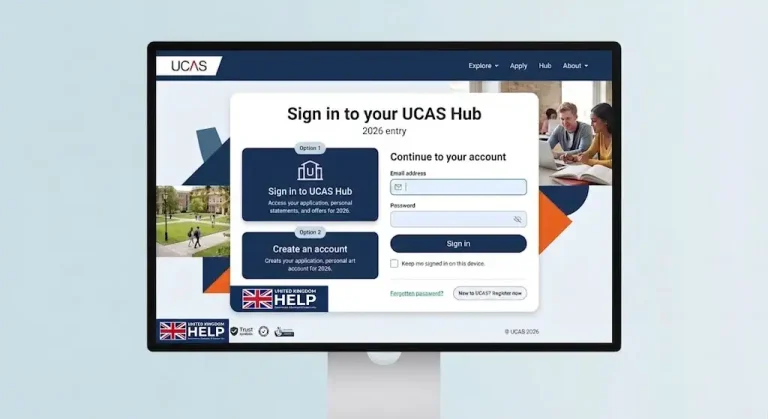
Choose UCAS Hub sign-in:
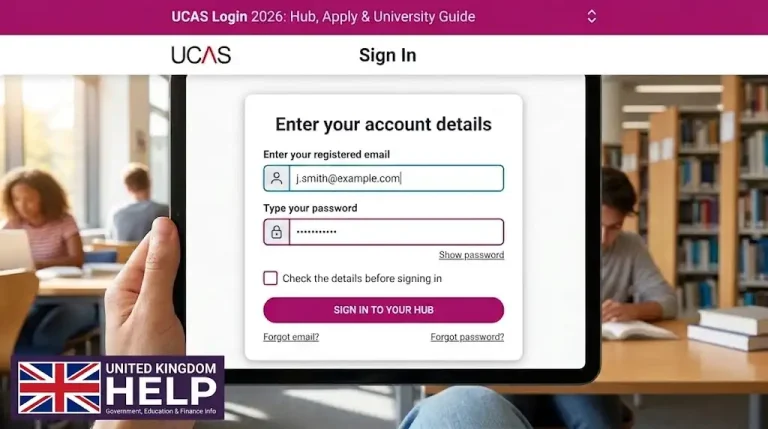
Enter your account details:
Check the login page:
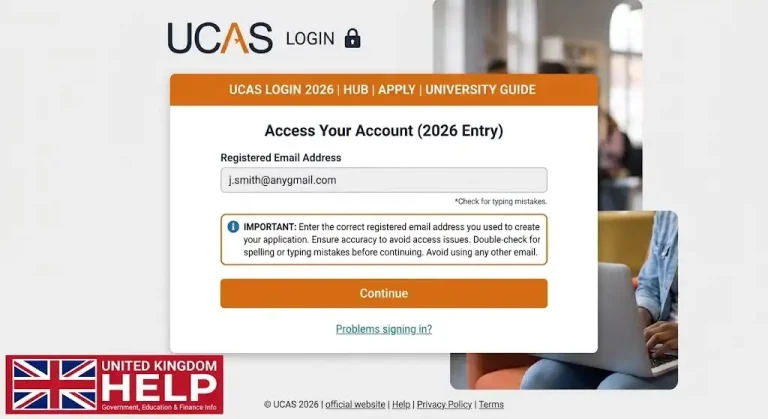
Use the correct email:
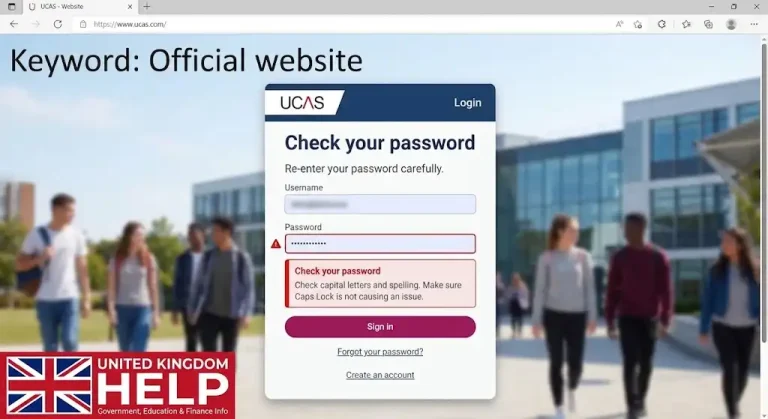
Check your password:
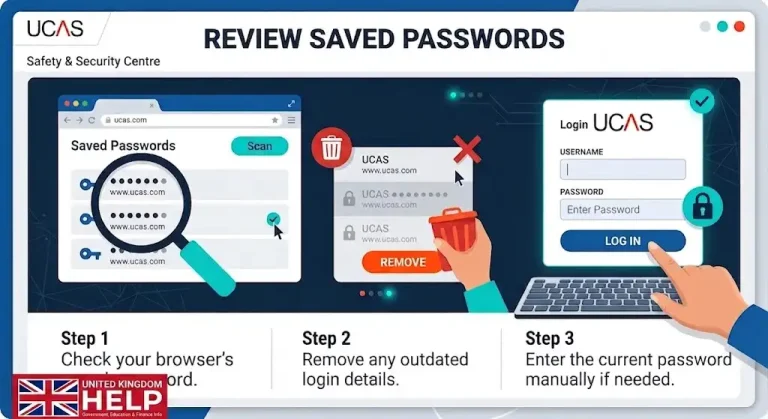
Review saved passwords:
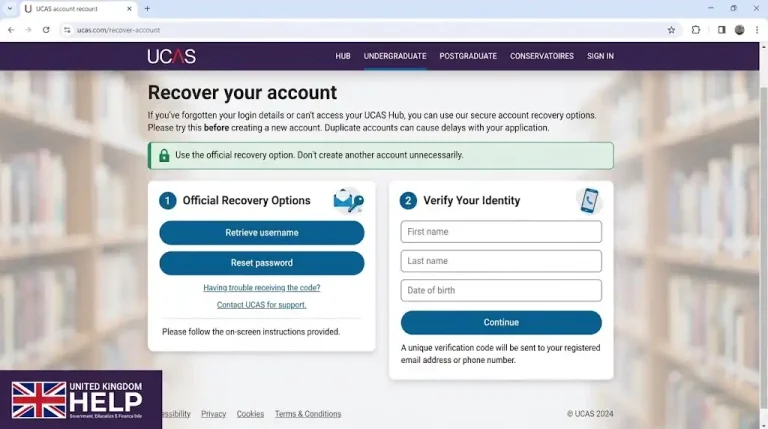
Recover your account if needed:
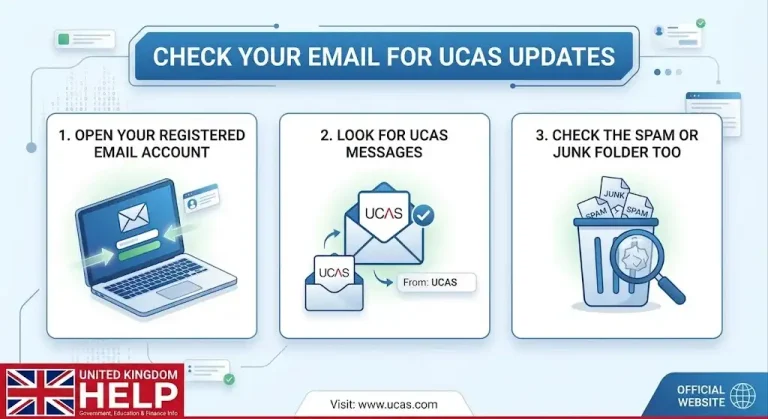
Check your email:
Tip: Avoid creating another account simply because you cannot immediately access your existing one. A duplicate account can make your application harder to manage.
UCAS Sign Up: Getting Started
Creating your account is the first practical step if you are applying for 2026 entry. Use an email address that you check regularly because important application-related messages may be sent there.
Visit the official website and select the option to register for the Hub. During registration, you will be asked questions about your intended start year and the level of study you are applying for.
Make sure you select the correct undergraduate application route. If you are taking a gap year or applying for a future intake, pay particular attention to the entry year shown during registration.
Once your Hub account is set up, look for the Your application area on the dashboard. This is where you can start building your application.
Applying Through a School or College
Your application route can depend on how you are applying.
If your school, college or registered centre gives you a buzzword, you can use it after registering and completing the initial Hub setup. This connects your application with the relevant centre.
Independent applicants do not need to create or guess a buzzword. If you are applying independently, follow the appropriate independent applicant process instead.
Your UCAS ID and Application Details
During the admissions process, you may come across a ID or Personal ID connected with your application. Keep these details somewhere secure because they can be useful when communicating with university application service or a university.
Your UCAS identification details are different from a university’s own student or applicant number. A university may issue its own reference once you progress with that institution.
Having the correct information available can be particularly useful around results day and Clearing, when applicants may need to discuss their application quickly.
Key UCAS Dates for 2026 Entry
Deadlines are one of the most important parts of the application process. The dates below relate to the 2026 undergraduate entry cycle supplied in the source material.
|
Date |
What it means |
|---|---|
|
13 May 2025 |
2026-entry undergraduate applications opened |
|
2 September 2025 |
Completed applications could be submitted |
|
15 October 2025, 18:00 UK time |
Deadline for Oxford and Cambridge and most medicine, dentistry and veterinary medicine/science courses |
|
14 January 2026, 18:00 UK time |
Equal consideration deadline for most undergraduate courses |
|
26 February 2026 |
Extra opens for eligible applicants |
|
30 June 2026, 18:00 UK time |
Applications submitted after this point are automatically entered into Clearing |
|
2 July 2026 |
Clearing opens |
|
24 September 2026, 18:00 UK time |
Final date for 2026-entry applications |
|
19 October 2026 |
Final date to add a 2026-entry Clearing choice |
Do not assume that one deadline applies to every course. Oxford and Cambridge applications, together with most medicine, dentistry and veterinary medicine/science applications, have an earlier equal-consideration deadline.
Always check the current information and the individual course details before relying on a date.
Completing Your UCAS Application
Once you have created your account, UCAS Apply is where you provide the information universities need to assess your application.
Depending on your circumstances, the application can include:
Take care when entering qualifications. If you are an international applicant, check qualification names, grades and awarding bodies carefully so the information matches your official records.
A university may later ask for supporting evidence, so accuracy from the beginning is important.
Choosing a UCAS University and Course
Searching for a university should involve more than comparing university names. The course itself matters just as much.
Before adding a choice, consider the course content, entry requirements, modules, teaching approach, location and any additional requirements. It search tools can help you explore available options, while university websites can provide more detailed information about accommodation, scholarships, fees and international student requirements.
A sensible shortlist should match both your academic position and your genuine interests. There is little benefit in selecting a course simply because a university is well known if the actual course does not suit your plans.
Personal Statement and Final Checks
Your personal statement should give universities useful evidence about your interest in the subject and your preparation for higher education.
Instead of relying on broad claims, explain what you have actually done. Relevant reading, projects, competitions, volunteering, work experience or independent study can help demonstrate genuine interest when they relate to your chosen subject.
Avoid making the statement heavily about one particular university if the same application is being sent to several choices. It should remain relevant to the courses you are applying for.
Before submitting, carry out a final review of your application. Check the entry year, personal information, qualifications, course choices, reference arrangements and declarations. Read the personal statement carefully and confirm the relevant deadline.
What to Do After Applying
Submitting your application is not the end of the process. Continue checking your Hub and the email account connected to your application.
Universities may send decisions, updates or requests for further action. Keeping your contact details current and monitoring your account means you are less likely to miss something important.
If you later need support with deadlines, applications or Clearing, use official website information rather than relying on outdated third-party guides.
What University Decisions Can You Receive?
Universities can respond to your course choices in several ways. The wording and conditions attached to a decision matter, so always read the full information rather than focusing only on the headline status.
|
Decision |
What it generally means |
|---|---|
|
Conditional offer |
You can be offered a place if you meet specified conditions, such as required examination grades. |
|
Unconditional offer |
The university is offering a place without additional academic conditions, although other requirements may still apply. |
|
Unsuccessful |
The university has decided not to offer you a place for that particular choice. |
|
Withdrawn |
The choice has been withdrawn. Check the reason shown in your application rather than assuming what happened. |
Your login 2026 gives you access to the area where you can monitor these decisions and review information connected with your application.
Choosing Between Your University Offers
Getting several offers is exciting, but making a decision requires more than picking the university with the most attractive name or location. Look carefully at what each course actually involves and whether the conditions are realistic for you.
Where eligible, you may be able to select a firm choice and an insurance choice.
Your Firm Choice
Your firm choice is normally the course you most want to attend. If you accept a conditional offer as your firm choice, you will need to satisfy its conditions to secure the place.
Before confirming it, make sure you understand the required grades and any other conditions. If the course has additional requirements, check them directly with the university.
Your Insurance Choice
An insurance choice can act as a backup if you do not meet the conditions of your firm choice. It should therefore be a genuine alternative rather than simply another university on your list.
Think realistically about the conditions attached to it. A sensible insurance option should give you a reasonable alternative based on your qualifications and circumstances.
What Should You Compare Before Deciding?
Entry grades are important, but they are only one part of the decision. Two courses with similar titles can have very different teaching styles, modules, assessments and opportunities.
Before accepting an offer, consider:
Use the university’s official website to check the latest course information. This is particularly important if details have changed since you submitted your application.
How Does UCAS Clearing Work?
Clearing is a route for applicants looking for available places at universities and colleges. Course availability can change quickly, particularly around results periods, so you should check current information rather than relying on an old course list.
For the 2026 entry cycle, the source information identifies 2 July 2026 as the opening date for Clearing. Applications received after 30 June 2026 at 18:00 UK time are automatically entered into Clearing, while 19 October 2026 is listed as the final date for adding a 2026-entry Clearing choice.
Searching for a Clearing Course
Start with the official course search and narrow your options according to the subject, location and other factors that matter to you.
Don’t choose a course simply because it has vacancies. Check its entry requirements, course content and suitability for your academic background.
Once you find a promising option, visit the university’s official website as well. Its own admissions or Clearing pages may contain important information about available courses and contact arrangements.
What to Have Ready When Contacting a University
A university may want to discuss your qualifications before deciding whether it can offer you a Clearing place. Having your information ready can make the conversation much easier.
Keep these details nearby:
Use contact information published by the university itself. Avoid relying on random websites or unverified social media posts for Clearing telephone numbers.
Adding a Clearing Choice to Your Application
If a university agrees to offer you a place through Clearing, follow the instructions provided through your university application service.
Do not assume that a verbal conversation automatically means your application is finished. Make sure you understand the course, offer and required conditions, then complete the relevant action in your Hub.
This is one reason it is important to keep checking your application rather than relying only on telephone or email conversations.
Important Points for International Students
International applicants should pay particular attention to university-specific requirements. Qualifications gained outside the UK may be assessed differently, and each university can set its own academic and English-language requirements.
After receiving an offer, check the institution’s international-student information carefully. Depending on your circumstances, you may need to consider:
Its offer is therefore only one part of preparing to study in the UK. You may have further requirements to complete directly with your chosen university.
UCA Hub Is Not the Same as a University Application
Creating a Hub account does not, by itself, mean that you have applied to university.
Your account provides access to the online service, but you still need to complete the relevant application sections, add your course choices, arrange the required reference and submit the application correctly.
Likewise, receiving a university offer does not necessarily mean every step before enrolment has been completed. Depending on your circumstances, you may still need to deal with accommodation, finance, enrolment, immigration or other university-specific requirements.
Solving Common Login Problems
If your login is not working, start with the simplest checks before creating another account.
For a forgotten password, use the official recovery process rather than repeatedly entering guesses. If you cannot remember which email address you used, search your inbox for previous messages containing terms such as application or Hub.
If you already have an application, avoid creating another account without guidance. Recovering access to your existing account is usually the better starting point.
Browser problems can also affect access. Try refreshing the page, using another supported browser, checking your internet connection or temporarily disabling an extension that may interfere with the website.
Most importantly, protect your login details. Don’t enter your it credentials into an unexpected page opened from an unfamiliar email or message. When in doubt, navigate directly to the official website.
UCAS Mistakes That Can Cause Problems
Don’t use an unofficial login page
One of the simplest ways to protect your application is to begin from the official website. Avoid entering your account details into unfamiliar pages sent through social media, email or messages.
Saving the official website as a bookmark can make future sign-ins safer and easier.
Check your qualifications carefully
Qualification information needs particular attention. Review qualification names, grades, dates and awarding bodies before submitting your application.
International applicants should be especially careful because qualifications with similar names may have different meanings. If you’re uncertain about how to enter a qualification, ask your school, adviser or check the official guidance instead of guessing.
Don’t overlook course-specific deadlines
Not every undergraduate course follows the same deadline. Medicine, dentistry, veterinary medicine/science, and applications to Oxford or Cambridge have an earlier equal-consideration deadline.
For 2026 entry, the supplied information lists 15 October 2025 at 18:00 UK time for these applications. The main equal-consideration deadline for most undergraduate courses was 14 January 2026 at 18:00 UK time.
Avoid leaving your application until the final day
Even when a deadline appears far away, references, education history, qualification details and personal statement preparation can take longer than expected.
Starting early gives you time to correct mistakes, obtain missing information and check course requirements without last-minute pressure.
Check requirements before choosing a course
Finding a course through it does not automatically mean you meet its entry requirements. Compare your qualifications with the current requirements for each course before adding it to your application.
Also check for additional conditions that may apply to particular subjects.
Keep checking university messages
After submitting your application, universities may contact you directly about interviews, supporting documents, decisions or further actions. Check the email address connected with your application regularly, including its spam or junk folder.
A Useful UCAS Preparation Checklist
Before you start:
While preparing:
Before submitting:
After submission:
How Can You Make the UCAS Process Easier?
Treat your application as a series of smaller tasks rather than one large form. Begin by researching courses, then compare entry requirements and create a realistic shortlist based on your qualifications and interests.
Once your choices are clear, work through the application carefully. Leave enough time to check personal information, education history, qualifications, references and other required sections before submitting.
After submission, stay organised. Keep your ID, offer information and university communications somewhere secure and easy to access. If your situation changes, check the latest information from it and the relevant university instead of relying on outdated advice from forums or social media.
Frequently Asked Questions
Conclusion
Whether you’re starting your application, checking UCAS login 2026, or preparing for university decisions, staying organised can make the process much easier. Use the official website for current deadlines, course information and application guidance. Keep your details accurate, monitor your Hub regularly, and check university requirements directly. For students facing changes after submitting an application, understanding offers, Extra and Clearing can help you make informed choices with confidence.