
GHIC card UK is a free healthcare card for eligible UK residents travelling temporarily to Europe and other covered destinations, helping you access medically necessary state healthcare under the same conditions as local residents. If you are planning a trip, this guide shows you how to complete your GHIC card application, check eligibility, apply online through the official NHS service, prepare the required information, renew or replace your card, and understand what to do if you need healthcare abroad. A GHIC is useful for eligible state healthcare, but it does not replace comprehensive private travel insurance.Visit our Homepage for more information.
What Is a UK GHIC Card?
A GHIC card UK is an official healthcare card for eligible UK residents who travel temporarily to countries where the UK healthcare arrangement applies. It can give you access to medically necessary state healthcare under the same conditions that apply to local residents, although some countries may require patients to make a contribution towards treatment. The GHIC card UK replaced the EHIC for many applicants, but a valid EHIC can still be used until its stated expiry date.
The card can remain valid for up to five years, so it is worth checking the expiry date before travelling. If your GHIC card UK is nearing expiry, you can apply for a new one up to nine months before the current card expires, helping you arrange your replacement in good time.
Quick facts
|
GHIC detail |
Information |
|---|---|
|
Cost |
Free |
|
Validity |
Up to 5 years |
|
Application |
Online through the official NHS service |
|
Main purpose |
Necessary state healthcare during temporary travel |
|
Private treatment |
Not covered |
|
Medical repatriation |
Not covered |
|
Travel insurance |
Still recommended |
|
Renewal |
Up to 9 months before expiry |
Who Is Eligible for a GHIC?
Before you begin a GHIC card application, check whether you meet the NHS eligibility rules. In most cases, you need to be ordinarily and legally resident in the UK and not covered by an EEA country or Switzerland.
Some people living outside the UK can also qualify in specific circumstances, including certain individuals with a registered S1 form or UK-issued A1 document. Eligible family members or dependants may also be covered.
If you have healthcare rights under the Withdrawal Agreement, you may need a UK EHIC instead of a standard GHIC. Check the NHS rules carefully if you live in or have links to an EEA country or Switzerland.
GHIC Rules for Students
Students may have extra requirements when applying. If you study in the EEA or Switzerland as part of a UK course, you may need a letter from your university or college confirming your course, study location, dates and UK address.
Students who began studying in the EEA or Switzerland before 1 January 2021 may have different Student EHIC rights. Those starting later may need a UK Student GHIC, depending on their circumstances.
How to Apply for a GHIC Card UK Online
Applying for a GHIC card online is straightforward when you use the official NHS service. The application is free, so there is no reason to pay a private company to complete the process on your behalf.
Official GHIC website:
Step 1: Confirm That You Are Eligible
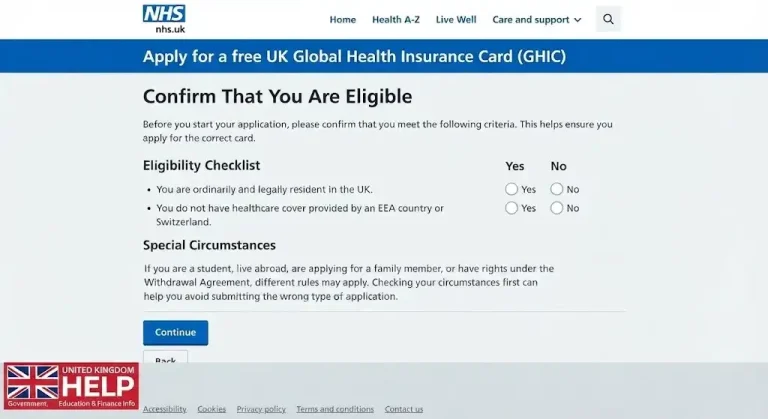
Before starting your GHIC card application, make sure you meet the basic eligibility conditions.
Tip: Do not assume that being a UK resident automatically means you qualify for the standard GHIC. Check the NHS requirements before proceeding.
Step 2: Prepare the Required Information
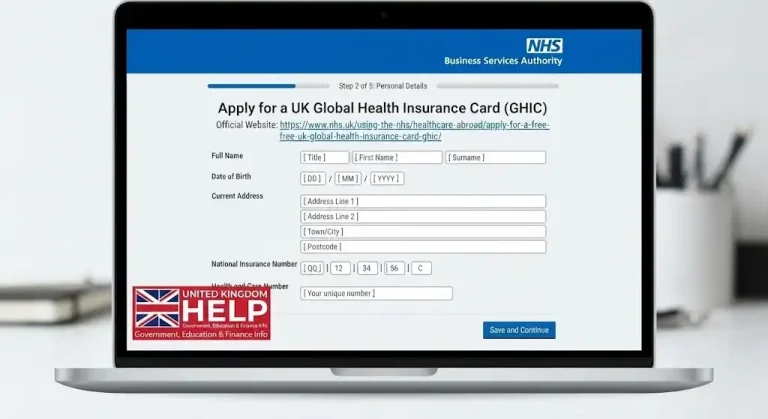
Having your details ready makes the GHIC application form easier to complete and reduces the chance of entering incorrect information.
You should have the following information available:
If you are applying for eligible family members at the same time, make sure you also have their relevant information available.
Step 3: Open the Official NHS Application Service
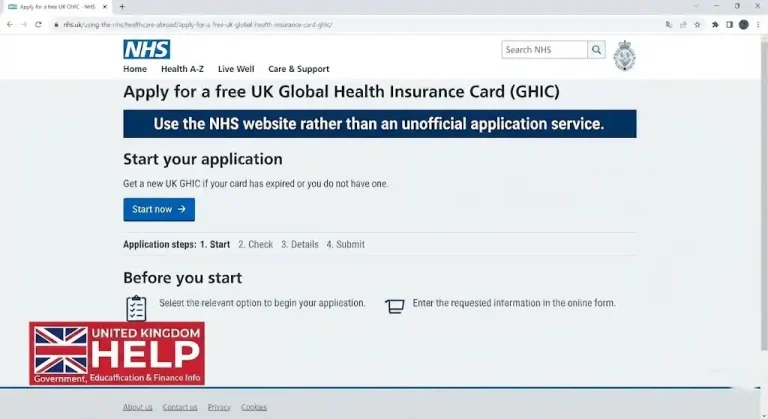
Once you have checked your eligibility and gathered your information, go to the official NHS GHIC page.
You can also include eligible family members during the same application process. Each approved family member receives their own GHIC card UK, so one physical card is not shared between family members.
Step 4: Submit Your Application and Check for Confirmation
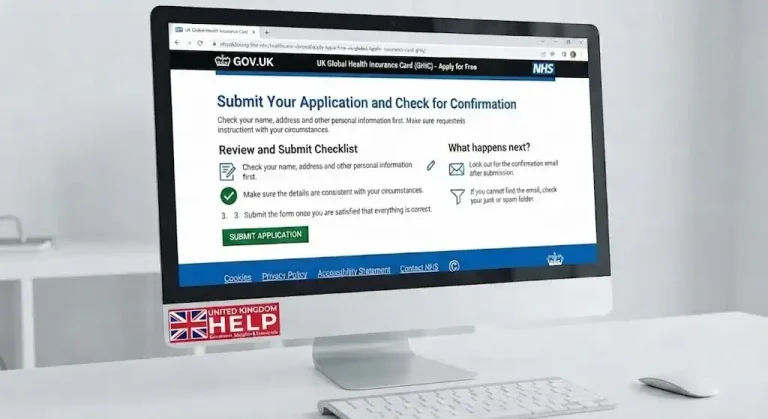
After completing all required sections, submit the application through the official NHS service.
According to the NHS guidance provided for this process, you should normally receive an email within 24 hours confirming whether your application has been approved. If further information or documents are needed, the process may take longer.
Step 5: Wait for Your GHIC Card UK to Arrive

After your application has been approved, the physical GHIC card UK will be sent to you by post.
Applying early gives you a better opportunity to have your card in hand before travelling and avoids unnecessary stress if you need to use it abroad.
What Does the GHIC Card UK Cover?
A GHIC card UK can help you receive state-provided healthcare that cannot reasonably wait until you return home. It is not limited to accidents or emergencies.
Depending on your circumstances, covered healthcare can include:
Some treatments need to be arranged with the healthcare provider before you travel. Kidney dialysis and chemotherapy are examples where advance arrangements may be necessary because treatment availability cannot always be guaranteed.
Does GHIC Mean Treatment Is Always Free?
No. One of the most common misunderstandings about the GHIC card UK is that it guarantees free healthcare everywhere.
The card gives you access to state healthcare on the same basis as a resident of the country you are visiting. If local residents normally have to pay a statutory charge, you may have to pay that charge too. A GHIC does not remove those local patient contributions.
For example, you may be asked to contribute towards prescriptions or treatment costs where the country’s healthcare system requires residents to do the same. These local co-payments are generally not refundable through the GHIC system.
Where Can You Use a UK GHIC?
Before travelling, check the current country-specific healthcare rules rather than assuming that every European destination operates in exactly the same way.
The NHS states that a UK GHIC can be used in countries in the European Economic Area (EEA) and certain other destinations. The current guidance also includes countries and locations such as Montenegro, Australia, Jersey, Guernsey, the Isle of Man, St Helena, Tristan da Cunha and Ascension Island, subject to the applicable healthcare arrangements.
There are also specific rules for Switzerland. Eligibility to use a UK GHIC there depends on factors such as nationality or status, so travellers should check the current NHS guidance before relying on the card.
Official NHS GHIC guidance and country coverage
The Republic of Ireland has separate arrangements. UK residents are automatically entitled to state healthcare there on the same basis as Irish citizens, and proof of UK residence may be requested.
What Does GHIC Not Cover?
A GHIC is useful, but it is not travel insurance. You should normally have both a valid GHIC and suitable private travel and medical insurance when travelling abroad.
The GHIC does not cover important costs such as:
This distinction matters because private treatment can be expensive, and returning to the UK for medical reasons can involve substantial transport costs. A GHIC should therefore be treated as one part of your travel healthcare arrangements, not as a replacement for insurance.
GHIC Login: Do You Need an Account?
People searching for GHIC login often expect a normal account dashboard where they can manage the card online. The NHS application process is the important route for applying for and managing your healthcare-card request; you should use the official NHS/NHS Business Services Authority service rather than an unofficial website claiming to provide a paid GHIC login service.
The key point is that you do not need to pay a third-party website for access to the official GHIC service. The NHS confirms that the card is free to apply for and warns applicants about unofficial services that charge fees.
If you are checking an application or looking for assistance, start from the official NHS GHIC page:
NHS GHIC official website
Be cautious with search results that use phrases such as “GHIC login”, “fast GHIC application” or “official GHIC application form” but ask for unnecessary payment. The genuine NHS application is free.
GHIC Card UK Renewal: When Should You Apply?
A standard UK GHIC lasts for up to five years. You do not have to wait until the final day of validity to start the GHIC card UK renewal process.
The NHS says you can apply for a new GHIC up to nine months before the existing card expires.
A practical renewal timeline
If your card is approaching its expiry date:
Official NHS GHIC application and renewal service
What If Your GHIC Card UK Is Lost or Does Not Arrive?
Losing your physical GHIC card UK before a trip can be stressful, but the absence of the card does not necessarily mean you have no access to help.
If you are already abroad and need medically necessary treatment but do not have your GHIC with you, you can apply for a Provisional Replacement Certificate (PRC). A PRC can provide the same level of cover as the relevant GHIC or EHIC for eligible treatment.
Importantly, a PRC is for a situation where you actually need medically necessary treatment during your visit. NHS guidance states that you cannot simply request a PRC in advance as a substitute for carrying your GHIC.
When can a PRC help?
A PRC may be relevant if:
What Information Is Needed for a PRC?
If you need a Provisional Replacement Certificate, be prepared to provide personal and treatment details. NHSBSA states that applicants may need their:
A PRC can also be requested on behalf of another person, although you will need to provide their relevant information.
If you need a PRC outside the normal service opening hours, NHSBSA advises contacting the service as soon as possible on the next working day.
Paying for Treatment Abroad
In some countries, you may be asked to pay all or part of a healthcare bill before receiving reimbursement. This does not automatically mean that the GHIC has failed.
If you are treated by a state healthcare provider and believe the treatment should have been covered, keep your paperwork carefully. Useful documents can include:
The NHS explains that you may be able to submit a refund claim through NHS Overseas Healthcare Services where the relevant healthcare rules allow it.
Do not throw away receipts simply because you have a GHIC. The card can establish your entitlement, but local healthcare charging arrangements can still require you to make a payment.
GHIC Card UK Application vs Renewal vs Replacement
These three situations are easy to confuse, but they serve different purposes.
|
Situation |
What you normally need |
|---|---|
|
First application |
Apply through the official NHS GHIC service |
|
Renewal |
Apply up to 9 months before your current card expires |
|
Existing EHIC |
Continue using it until its stated expiry |
|
Lost card abroad |
Request help with a PRC if medically necessary treatment is needed |
|
GHIC not arrived before travel |
A PRC may provide temporary cover if you need medically necessary treatment |
|
Private treatment |
GHIC does not provide private medical cover |
The safest approach is to identify which situation applies to you before searching for a GHIC application form or attempting a GHIC card UK apply online search. This reduces the chance of using the wrong service or paying an unnecessary third-party fee.
Travelling With Your GHIC: A Simple Checklist
Before leaving the UK, check the following:
The NHS recommends taking your physical GHIC with you. If you need treatment, present the card to the healthcare provider and make sure you are using a public/state provider rather than a private facility.
Important Mistakes to Avoid
Paying for a free application
The UK GHIC is free. If a website asks you to pay simply to submit a standard GHIC application, you may be dealing with an unofficial service. Start from the NHS website instead.
Assuming GHIC covers everything
It does not. Medical repatriation, private healthcare and certain rescue costs are outside its normal protection. This is why travel insurance remains important.
Waiting until departure
Although there is no general deadline to apply, waiting until the day before travel is poor preparation. The NHS says an approved card should normally arrive within 15 working days, so give yourself sufficient time.
Treating every European country identically
Healthcare agreements differ between destinations. Check the official country guidance before travelling, particularly if you are visiting a destination with special arrangements.
What information may be required for a PRC?
NHSBSA says you may need:
Before You Apply: Check These Details
A standard UK GHIC is available to people who are ordinarily and legally resident in the UK and who do not have healthcare cover provided by an EEA country or Switzerland. Some people living outside the UK can also qualify in specific circumstances, including certain people with a registered UK S1 or a UK-issued A1 document.
The application process includes a UK residency check. If the NHS Business Services Authority cannot confirm your entitlement automatically, you may be asked to provide evidence supporting your UK residency or other entitlement.
Information to have ready
For a normal GHIC application form, you should have:
Use the Official GHIC Website
The safest starting point for a GHIC card apply online search is the NHS website. The official service is free, and NHS guidance specifically warns that unofficial websites may charge applicants for a service they do not need to pay for.
Official GHIC website:
Beware of paid GHIC services
The words “GHIC website” or “GHIC login” can lead to commercial websites in search results. A website asking you to pay for a standard UK GHIC application is not necessary. NHSBSA confirms that UK GHIC and UK EHIC applications are free.
Before entering personal information, check that you have reached the official NHS or NHSBSA service
FAQs
Conclusion
The GHIC card UK is an important part of preparing for healthcare needs while travelling abroad. Eligible UK residents can use it to access medically necessary state healthcare under the applicable rules of the destination country. Before travelling, make sure your card is valid, check the healthcare arrangements for your destination and apply through the official NHS service if you need a new card or GHIC card UK renewal.
Remember that a GHIC is not a replacement for travel insurance. It does not normally cover private treatment, medical repatriation or certain rescue costs. If your card is lost, delayed or unavailable when you need treatment abroad, a Provisional Replacement Certificate (PRC) may provide temporary support in eligible circumstances. By using the official NHS website for your GHIC card application, keeping your details up to date and carrying your card when travelling, you can be better prepared for unexpected healthcare needs.