
EPC Register makes it easy to check whether a property has a valid Energy Performance Certificate before you buy, sell or rent. If you need an epc register uk gov search, the official GOV.UK service lets you find an existing certificate online using a postcode, street name and town, or certificate number, without creating an account. You can then review the available EPC details and, where provided, view or download the certificate. The service covers properties in England, Wales and Northern Ireland, while Scotland has a separate EPC .Visit our Homepage for more information.
What Is an EPC?
An Energy Performance Certificate (EPC) helps you understand how energy-efficient a property is before you buy, sell or rent it. It gives the building an A to G energy rating, with A being the most efficient and G the least efficient for domestic properties. The certificate also includes information about energy use and recommended improvements. If you are comparing properties, checking the EPC can help you assess energy performance and potential efficiency upgrades before making a decision.
EPC Register Check Online: What You Need
Before starting an epc register check online, have one of the following available:
|
Search information |
When it is useful |
|---|---|
|
Postcode |
Usually the easiest option for finding a residential property |
|
Street name and town |
Useful when you do not have the full postcode |
|
Certificate number |
Helpful when you already have the EPC reference |
You do not normally need to register for an account simply to search for an existing certificate. The official GOV.UK service is designed to let users find certificates directly.
Important Before You Search
Make sure you select the correct property from the results. Several properties may share similar addresses, particularly on large developments or streets with repeated house numbers.
If you are checking an EPC before renting or buying, compare the address carefully with the property you are actually considering.
How to Do an EPC Register Check Online
Checking an EPC online is straightforward when you use the official GOV.UK service. You can search for an existing certificate using property details and then open the matching record.
Step 1: Open the Official GOV.UK EPC Service
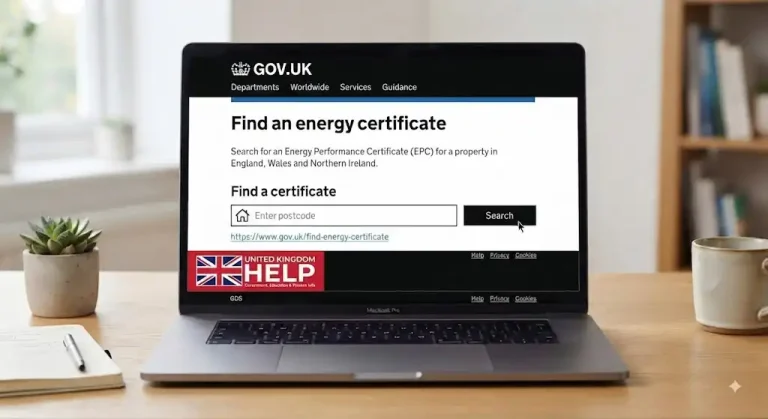
Start by visiting the government’s Find an Energy Certificate service.
What to do:
Official website:
GOV.UK – Find an Energy Certificate
Step 2: Select the Appropriate Search Option
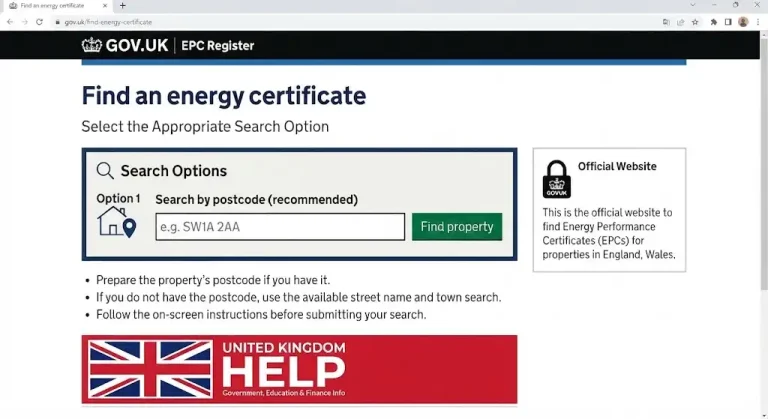
Once the service opens, follow the instructions displayed on the screen.
What to do:
For most users, a postcode is a convenient way to start an epc register check online.
Step 3: Enter the Property Details
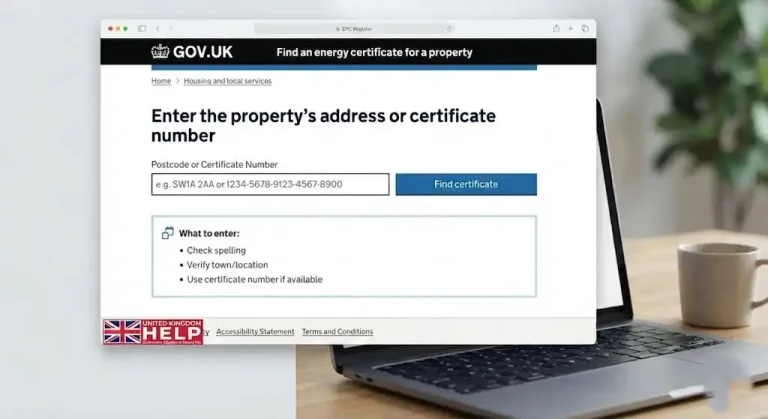
Enter the information requested by the government service carefully.
What to do:
Using accurate details can make it easier to identify the correct EPC record.
Step 4: Check the Search Results
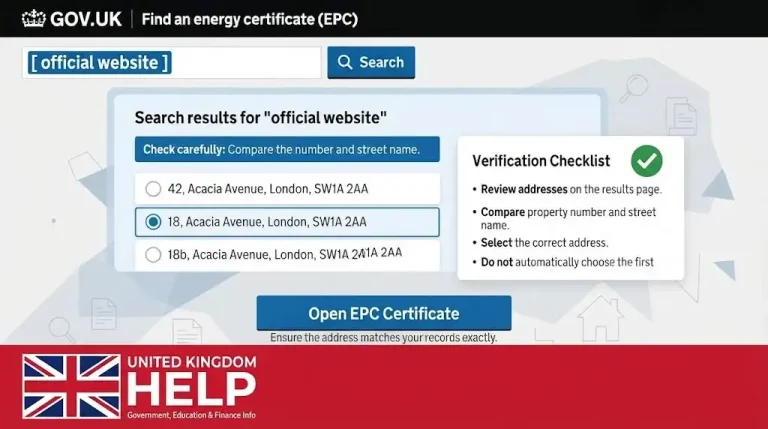
After submitting the information, the service will show matching property results.
What to do:
This is an important part of an epc check because selecting the wrong address could lead you to information for a different property.
Step 5: View the EPC Information
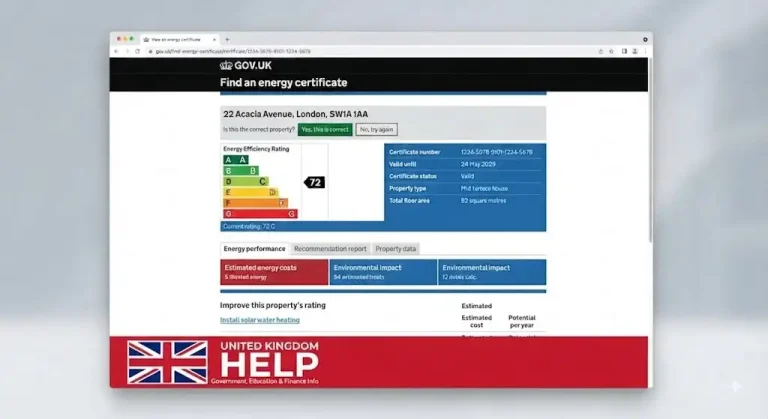
Once you select the correct property, you can access the available certificate information.
What to check:
The purpose of an epc register check online gov uk search is to locate the appropriate EPC record and review the energy-performance information associated with the property.
Step 6: Save the Certificate for Your Records
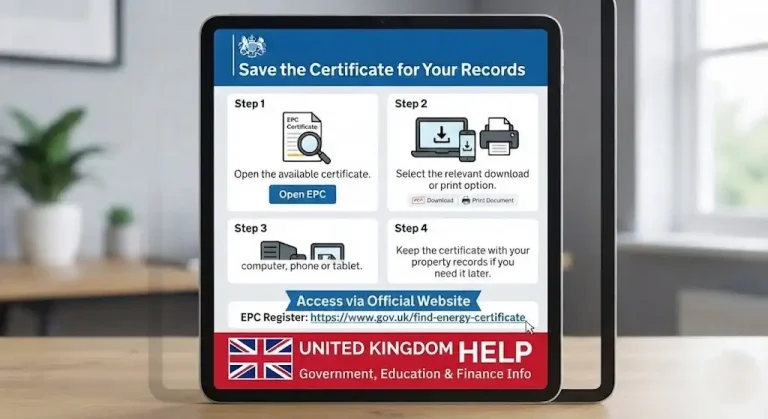
If the service provides an option to download or print the certificate, you can save a copy for future reference.
What to do:
Saving a copy can be useful if you are buying, selling or renting a property and want to refer back to the EPC information.
Is an EPC Register Check Online Free?
Yes. Searching for an existing certificate through the official GOV.UK Find an Energy Certificate service is free. GOV.UK also states that you can use the service to check whether a property has a valid EPC and download it for free where available.
So, if you are searching for an epc register check online free, you should start with the official government website rather than paying a third-party website simply to locate an existing record.
There is an important distinction, however. Checking an existing EPC is free, but obtaining a new EPC is not necessarily free. If a property has no valid certificate or its EPC has expired, the owner may need to arrange a new assessment with an accredited energy assessor.
How to Download an EPC
Once you have identified the correct property, look for the option provided by the service to access the certificate or download the available document.
A simple process is:
Keep a copy if you are comparing properties, preparing for a move or reviewing energy-efficiency information.
The official service specifically allows users to find existing certificates, while GOV.UK confirms that an existing EPC can be checked and downloaded free of charge.
What Does the EPC Rating Mean?
The EPC rating gives you a quick indication of the property’s energy efficiency.
|
Rating |
General meaning |
|---|---|
|
A |
Most energy efficient |
|
B |
Very efficient |
|
C |
Good efficiency |
|
D |
Moderate efficiency |
|
E |
Lower efficiency |
|
F |
Poor efficiency |
|
G |
Lowest efficiency |
The EPC itself provides more detail than the letter alone. It can include information about energy use and recommendations for improving the property’s efficiency.
A lower rating does not automatically mean that you cannot buy or rent a property. However, landlords and property owners may have additional legal responsibilities depending on the property type and applicable energy-efficiency rules.
How Long Does an EPC Stay Valid?
An EPC is generally valid for 10 years. A new certificate does not normally have to be obtained every time a property is sold or rented during that period, provided the existing certificate remains valid.
If a newer EPC has been produced for the same property, it can replace the previous certificate. This is why checking the date on the record matters when you are assessing whether an EPC is current.
For buyers and tenants, an epc register uk gov online search can therefore be useful before relying on an EPC supplied by someone else.
Who Uses the EPC Register?
An epc register check can be useful for several people, not just property owners. Buyers can use the record to understand the energy performance of a home before proceeding with a purchase, while tenants may want to see the available EPC information when considering a rental property.
Landlords, sellers and property professionals may also need to confirm that an appropriate certificate exists. The official service covers homes, business properties and public buildings in England, Wales and Northern Ireland. Scotland has a separate system.
For Buyers
If you are purchasing a property, an EPC can provide useful information about its energy efficiency and suggested improvements. It should not replace a full property survey, but it can be one part of your research before making a decision.
A buyer can perform an epc register check online using the property’s postcode, street name and town, or certificate number. This makes it possible to verify the available record rather than relying only on information copied into a property listing.
For Tenants
Renters can also benefit from checking the EPC of a property they are considering. Looking at the rating and recommendations can give you a better idea of the building’s energy performance.
For private rented homes covered by the relevant regulations in England and Wales, the current minimum standard is generally EPC band E unless a valid exemption applies. The government guidance states that landlords cannot let or continue to let covered properties rated F or G unless an exemption applies.
For Landlords
Landlords should keep track of their property’s EPC status and understand the rules that apply to their particular property and tenancy.
For domestic private rented properties covered by the Minimum Energy Efficiency Standards, an F or G rating can require the landlord to take action to improve the property to at least E or register a valid exemption.
What If You Cannot Find an EPC?
One of the most common reasons for an unsuccessful epc register check online gov uk is that the property details do not match the information held by the register.
Start by checking the information you entered. A small mistake in a postcode, street name or certificate reference can prevent the correct record from appearing.
Try these checks:
The official GOV.UK service states that if a property does not have an energy certificate, or its certificate has expired, a new certificate can be obtained through an assessment.
A Property May Have More Than One Certificate
Do not be surprised if you encounter more than one certificate associated with a property. EPC records can change over time, and a newer certificate may replace an older one.
This is particularly important if you are reviewing an EPC supplied by a seller, landlord or agent. Check the certificate date and property details rather than assuming that an older document is the current record.
Does an EPC Expire?
For the normal EPC system, a certificate is generally valid for 10 years. However, the existence of an older certificate does not necessarily mean that it is the certificate you should rely on today.
If a newer EPC has been lodged, it may supersede an earlier record. This is why an epc check online free can be worthwhile before relying on a certificate you received from another source.
If the official register indicates that the certificate has expired, GOV.UK advises arranging a new energy certificate assessment.
EPC Rules for Private Rental Properties
The EPC rating can have particular significance for landlords in England and Wales.
Under the current domestic Minimum Energy Efficiency Standards guidance, covered private rented properties generally need to meet at least EPC band E unless a valid exemption applies. The rules apply to relevant domestic private rented properties that are legally required to have an EPC.
If a covered property has an F or G rating, the landlord may need to improve the property to E or register an applicable exemption before letting it in circumstances covered by the regulations.
The exemption process has also been updated. GOV.UK’s current service requires landlords or agents to use GOV.UK One Login to register or manage a private rented sector energy standards exemption.
What About Commercial Properties?
Different rules apply to non-domestic private rented property. GOV.UK guidance states that the Minimum Energy Efficiency Standards for covered non-domestic properties in England and Wales generally require at least an EPC E rating unless a valid exemption has been registered.
Therefore, a business owner or commercial landlord should not automatically apply residential EPC rules to a commercial building.
If your situation involves a business property, check the relevant government guidance rather than relying on a general residential explanation.
England, Wales, Northern Ireland and Scotland
The location of the property matters when carrying out an epc uk gov online search.
The GOV.UK Find an Energy Certificate service covers properties in:
The government specifically states that Scotland has a different service for finding an energy certificate.
Scotland Uses a Separate EPC Service
If the property is in Scotland, do not keep repeating an England, Wales or Northern Ireland search when the property cannot be found.
Use the Scottish Energy Performance Certificate Register instead:
This distinction is one of the first things to check when an epc checker does not return the property you expect.
Common EPC Register Problems and Solutions
|
Problem |
What to try |
|---|---|
|
Property does not appear |
Check the postcode and address carefully |
|
Wrong property appears |
Compare the full address before selecting a result |
|
Certificate cannot be found |
Try another available search method |
|
Certificate appears outdated |
Check the certificate date and whether a newer record exists |
|
Property is in Scotland |
Use the separate Scottish EPC service |
|
Certificate has expired |
Arrange a new assessment if one is required |
|
You need a new certificate |
Use the official GOV.UK assessor service |
|
You need an exemption |
Use the current GOV.UK exemption service |
These checks can resolve many straightforward problems without paying a third party to perform an epc checker online free.
How to Check an EPC Before Renting or Buying
If you are using the register as part of a property decision, avoid looking only at the letter rating. Open the certificate and review the available information.
A useful checklist is:
Before renting or buying:
An EPC is useful evidence about energy performance, but it is not a substitute for a structural survey, legal checks or other property due diligence.
Can You Check an EPC Without an Account?
For an ordinary certificate search, you can use the official Find an Energy Certificate service without first creating an account. GOV.UK provides searches by postcode, street name and town, or certificate number.
This is why the epc checker online process is relatively accessible for buyers, tenants and other members of the public.
An account requirement is relevant to some other EPC-related government services. For example, the current private rented sector exemption service uses GOV.UK One Login.
Is the EPC Register the Same as EPC Data?
Not exactly. The individual-property search service is designed for people who want to find an energy certificate for a particular building.
There is also a separate government service for researchers and product developers who need bulk Energy Performance Certificate data. It provides domestic and non-domestic EPC datasets and API access for England and Wales.
If you simply want to check your home, rental property or a property you are considering buying, you should use the individual epc register uk gov search rather than the bulk data service.
What Information Should You Keep?
Once you have found the right certificate, saving a copy can be useful. Keep the document with your property records if you are the owner, or retain it as part of your research if you are a prospective buyer or tenant.
Record:
Having these details available can make future communication with an estate agent, landlord, assessor or property professional easier.
Need Help With an EPC Search?
If you have followed the official search process and still cannot find the certificate or report, GOV.UK provides support through the Ministry of Housing, Communities and Local Government.
The official service lists:
Email: [email protected]
Telephone: 020 3829 0748
Opening hours: Monday to Friday, 9am to 5pm.
For a new certificate, the government also advises contacting an accredited assessor directly. If you are unhappy with an assessment, GOV.UK says you should first complain to the assessor and can then contact the assessor’s accreditation scheme if the issue remains unresolved.
EPC Register Check: Quick Decision Guide
Not sure which route to take? Use this simple process.
I want to find an existing certificate
→ Use the official GOV.UK Find an Energy Certificate service.
I cannot find the property
→ Check the address, postcode and search method, then confirm the property’s UK nation.
The certificate is expired or missing
→ Check whether a new energy certificate assessment is required.
I need an EPC for a property I own
→ Use GOV.UK to find an accredited assessor.
I am a landlord with an F or G rating
→ Check the applicable Minimum Energy Efficiency Standards and whether an exemption applies.
The property is in Scotland
→ Use the separate Scottish epc certificate.
Official EPC Links
EPC Register Check: A Practical Checklist
If you want to complete your search without unnecessary delays, use this checklist:
Before searching
During the search
After finding the EPC
This approach makes an epc check online more reliable and helps prevent mistakes caused by selecting the wrong property.
EPC Register vs Getting a New EPC
These two services are easy to confuse, but they serve different purposes.
|
Your situation |
What you should do |
|---|---|
|
You want to find an existing EPC |
Use the official EPC search |
|
You want to check an EPC online |
Use GOV.UK’s epc register ni Find an Energy Certificate service |
|
You cannot find a valid certificate |
Check the property details and certificate status |
|
The EPC has expired |
Consider whether a new assessment is required |
|
You need a brand-new EPC |
Arrange an assessment with an accredited assessor |
|
You want bulk EPC data |
Use the government’s energy-performance data service |
|
The property is in Scotland |
Use the Scottish epc checker |
GOV.UK specifically separates the individual certificate search from the service for obtaining a new certificate.
Important Point About EPC Reform
EPC rules and the methodology used to produce certificates are subject to government reform work. In March 2026, the government published a partial response to its consultation on reforms to the Energy Performance of Buildings regime, with further regulatory work expected subject to parliamentary approval.
For that reason, property owners and landlords should check current GOV.UK guidance when making decisions based on legal EPC requirements. A search article should not be treated as a substitute for the latest government regulations.
FAQs
Final EPC Register Guide
For most people, an epc register check is a simple online task. Start with the official GOV.UK Find an Energy Certificate service, enter the postcode, street and town, or certificate number, and carefully select the correct property from the results.
If you are specifically searching for an epc uk gov, epc register uk gov online, or epc register check online gov uk, use the government service rather than an unofficial site. The search itself is designed to help you find an existing certificate, while a separate GOV.UK service is available if you need a new assessment.
The key thing is to check the property address, epc certificate date and energy rating rather than relying on a third-party listing alone. If no valid certificate exists, GOV.UK provides the official route for arranging an assessment through an accredited energy assessor.