
The NHS Portal is the official online platform that gives authorised health and social care professionals secure access to essential NHS digital services. Through NHS.net Connect, eligible users can sign in to NHSmail, Microsoft 365 applications, shared workspaces, encrypted communication tools, and collaboration services from any supported internet-connected device.The nhs login online not app.
Whether you have recently joined the NHS, started a clinical placement, or already work within an NHS organisation, knowing how to use the NHS Portal letters is essential for accessing day-to-day digital resources safely. Unlike public websites, this platform is restricted to authorised users whose accounts have been created by an approved NHS organisation. Visit our Homepage for more information
What is NHS Portal
The NHS Portal acts as the central gateway to NHS.net Connect, bringing together a range of secure digital services used across NHS organisations. Instead of signing in to separate systems for email, document storage, collaboration, and productivity tools, authorised users can access everything through a single protected account.
Built on Microsoft’s cloud technology, the platform is designed to meet strict NHS security and information governance standards. This helps ensure that confidential patient records, organisational data, and internal communications remain protected.
Unlike standard email platforms, NHS accounts include enhanced security measures such as identity verification, encrypted messaging, and additional authentication features that are specifically designed for healthcare environments.
NHS Portal Login Guide
After your account has been activated, signing in only takes a few minutes. Follow these steps to access NHS.net Connect securely.
Step 1 – Open the Official NHS Portal
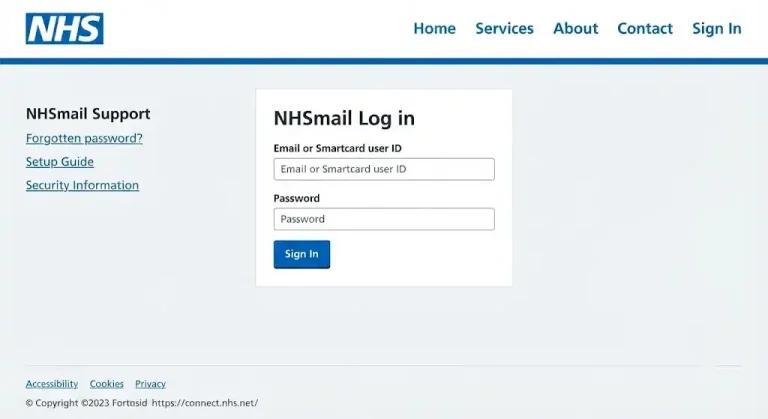
Always use the official NHS website rather than links received through unexpected emails to reduce the risk of phishing attacks.
Step 2 – Select Sign In
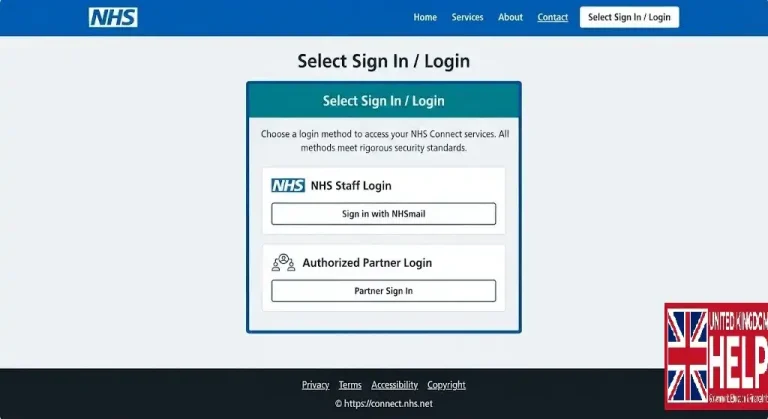
On the homepage, click the Sign In button.
You’ll be redirected to Microsoft’s secure authentication page, where NHS accounts are verified before access is granted.
Step 3 – Enter Your NHS Email Address
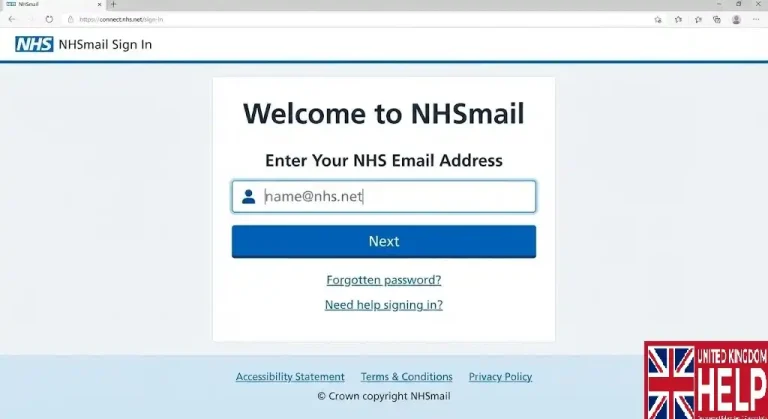
Type the NHS email address provided by your organisation.
Some organisations automatically recognise the @nhs.net domain, but you should always check your email address carefully before continuing to avoid login errors.
Step 4 – Enter Your Password
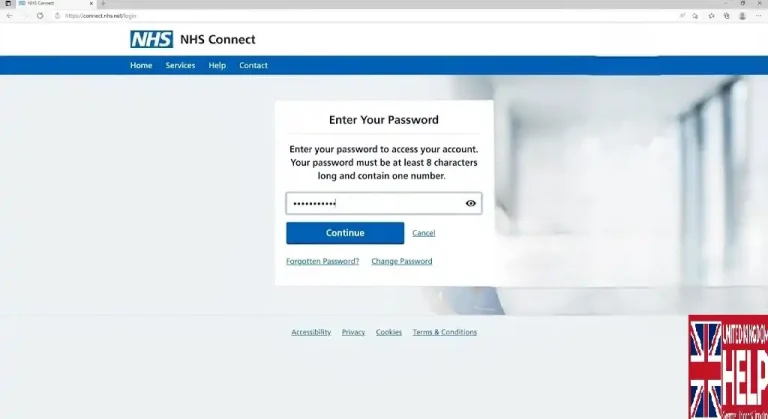
If this is your first login, use the temporary password supplied with your account.
Existing users should enter their personal password. Remember that passwords are case-sensitive, so check for typing mistakes before signing in.
Step 5 – Verify Your Identity
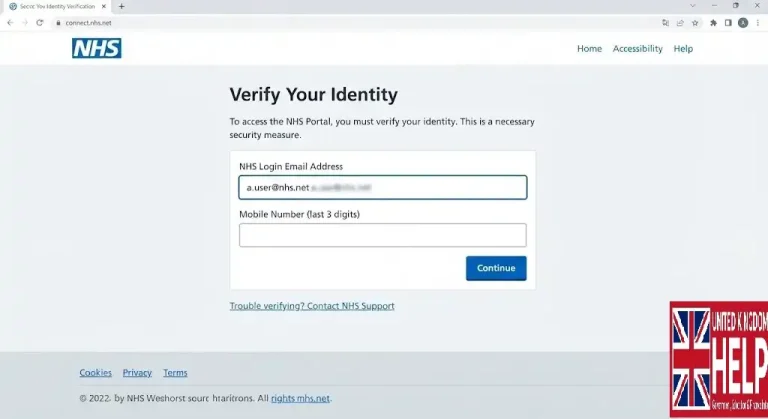
Many NHS organisations require Multi-Factor Authentication (MFA) as an additional layer of protection.
If MFA is enabled, complete the verification request using your registered authentication method before your account is opened.
NHS Account Registration Process
Once your organisation confirms that you require access, your account is created through a secure internal process.
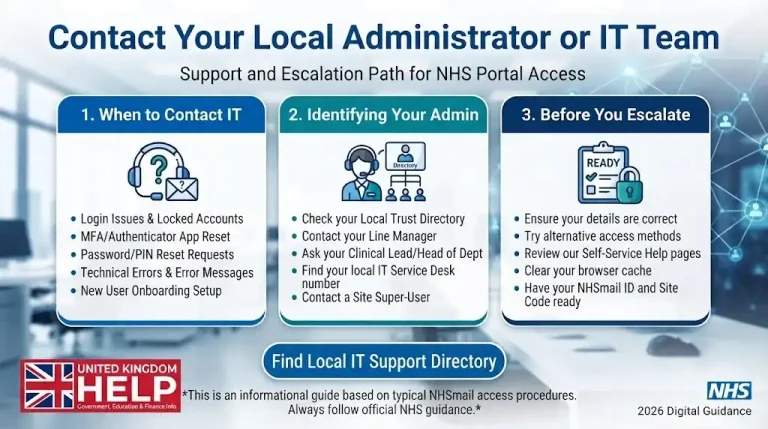
Step 1 – Contact Your Local Administrator or IT Team
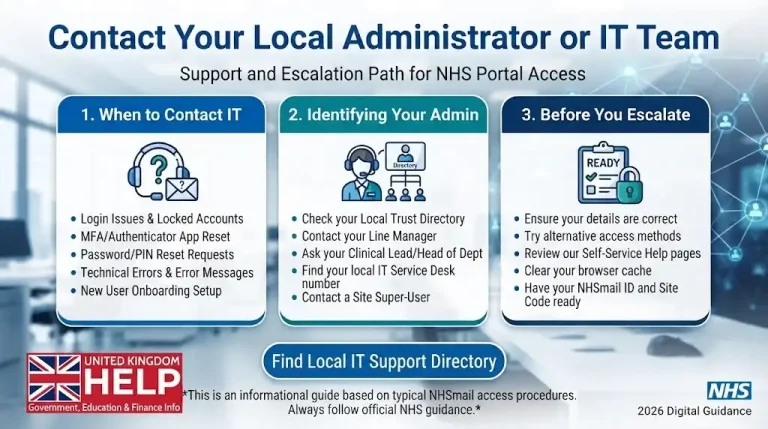
Begin by speaking with your organisation’s Local Administrator or IT Service Desk. They will confirm whether you are eligible for an NHS account and start the registration process on your behalf.
Step 2 – Complete Identity Verification
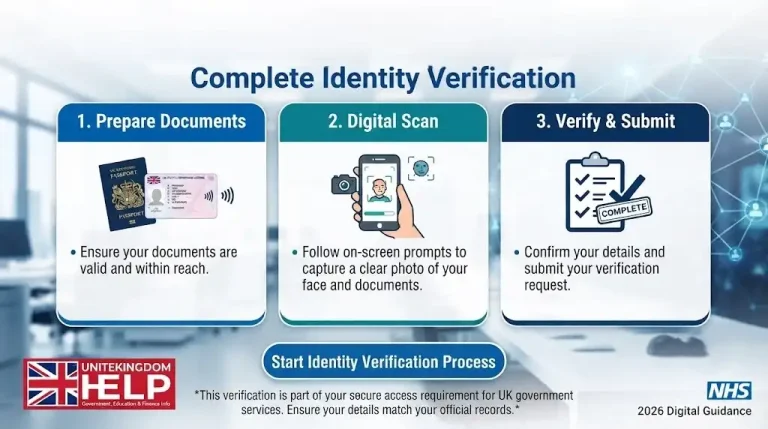
Before an account is issued, your organisation must verify your identity. This security measure helps prevent unauthorised access and ensures NHS systems remain protected.
Depending on local procedures, you may be asked to provide employment details, identification documents, or other information needed to confirm your eligibility.
Step 3 – Account Provisioning
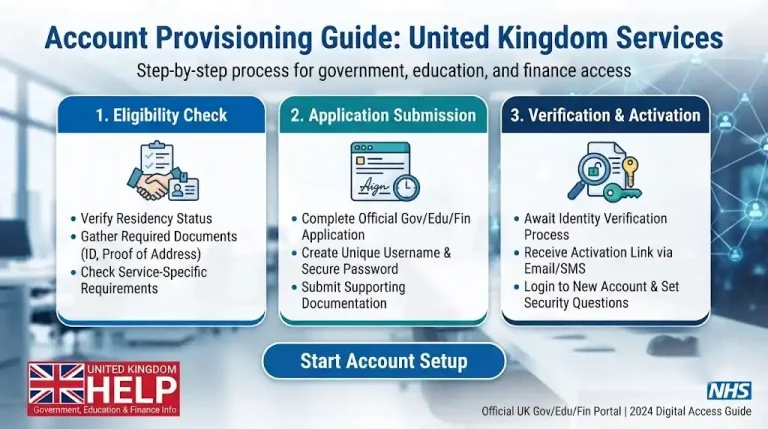
After approval, your NHS account is created within the NHS.net service. Although processing times vary between organisations, most accounts are activated within 1 to 24 hours.
Once provisioning is complete, your login credentials become available.
Step 4 – Receive Your Login Details
After your account has been activated, you’ll normally receive:
- Your official @nhs.net email address
- A temporary password
- Sign-in instructions
- Security and acceptable-use guidance
Organisations usually send these details through secure internal channels to help protect account information.
Why NHS.net Connect Is Important
Every day, NHS organisations exchange large volumes of sensitive information, including patient referrals, clinical updates, appointment details, laboratory results, and internal communications. Protecting this information is essential.
The NHS Portal letters provides one secure environment where authorised healthcare professionals can communicate and collaborate while complying with UK healthcare security requirements.
Some of the key benefits include:
- Secure communication between NHS organisations
- Centralised access to Microsoft 365 services
- Protected document sharing and collaboration
- Identity verification through NHS authentication
- Support for remote and hybrid working
- Compliance with NHS information security standards
Digital Services Available Through the NHS Portal
After signing in successfully, users can access several integrated Microsoft and NHS services from one dashboard.
|
Service |
Purpose |
|---|---|
|
Outlook |
Secure NHS email communication |
|
Microsoft Teams |
Online meetings, messaging and collaboration |
|
OneDrive |
Secure cloud-based file storage |
|
SharePoint |
Departmental document management |
|
Office Apps |
Word, Excel and PowerPoint online |
|
Global Address List |
Search the NHS staff directory |
|
Care Identity Integration |
Secure authentication for approved NHS services |
These applications enable healthcare teams to communicate efficiently while maintaining high standards of privacy and data protection.
Who Can Access the NHS Portal?
The NHS Portal is not available for public registration. Access is only granted to individuals whose organisations are authorised to issue NHS accounts.
Typical users include:
- NHS employees
- Doctors and consultants
- Nurses
- Dentists
- Pharmacists
- Clinical support staff
- Administrative teams
- GP practice employees
- Approved healthcare contractors
- Medical students undertaking NHS placements
- Eligible social care organisations working with nhs staff login England
Each account is created by an authorised Local Administrator, meaning users cannot register independently.
Eligibility Requirements
Before an NHS account can be issued, applicants generally need to meet several eligibility requirements.
These usually include:
- Employment with an approved NHS organisation
- Placement within an authorised NHS facility
- Approval from the employing organisation
- Successful identity verification
- Authorisation from a Local Administrator
Because NHS accounts provide access to confidential healthcare systems, only verified individuals are granted login credentials.
How NHS Accounts Are Created
Many first-time users assume they can register for an NHS account directly through the website. In practice, the process is different. NHS.net Connect accounts are created by authorised NHS organisations rather than through public self-registration.
If you are joining an NHS trust, GP practice, partner organisation, or starting an approved clinical placement, your employer or education provider will request your account through a designated Local Administrator. This approach helps ensure that only verified individuals can access NHS digital services.
What You’ll Need Before Your First Sign-In
Preparing everything in advance can make your first login much smoother. Before opening the NHS Portal, make sure you have access to:
- Your NHS email address
- Temporary password
- Reliable internet connection
- A supported web browser
- Mobile phone or authentication device
- Microsoft Authenticator (where required)
- Any security instructions supplied by your organisation
Having these items ready helps avoid delays during account activation.
First-Time Login Checklist
Your initial sign-in usually includes several security tasks designed to protect your account and confidential NHS information.
During your first login, you may be asked to:
- Change your temporary password
- Create a strong personal password
- Accept the NHS Acceptable Use Policy
- Review your profile details
- Set up security questions
- Register Multi-Factor Authentication (MFA)
- Confirm your recovery information
Completing these steps helps secure your account and ensures you can recover access if you ever forget your password.
Password Security Tips
Creating a strong password is one of the easiest ways to keep your NHS account secure. Because NHS accounts provide access to confidential healthcare systems, using a weak or easily guessed password can increase the risk of unauthorised access.
When setting a new password, follow these recommendations:
- Use a combination of uppercase and lowercase letters.
- Include numbers where possible.
- Add special characters if your organisation’s password policy allows them.
- Avoid common words, names, or predictable number sequences.
- Never use personal information such as your date of birth.
- Do not share your password with anyone.
- Store your credentials securely and update them whenever required by your organisation.
Strong passwords, combined with Multi-Factor Authentication (MFA), provide an additional layer of protection for NHS accounts and help safeguard sensitive patient information.
NHSmail Access Through the NHS Portal
Once you’ve successfully signed in to the nhs net login email, you can immediately access NHSmail, the secure email service used across NHS organisations. Unlike standard email platforms, NHSmail is built for healthcare communication and incorporates encryption, identity verification, and strict security controls to help protect confidential patient and organisational information.
Healthcare professionals rely on NHSmail for a wide range of day-to-day tasks, including sharing clinical updates, receiving referrals, managing appointments, and communicating securely with colleagues across different NHS organisations.
With your NHS account, you can:
- Send and receive secure NHS emails
- View clinical referrals and patient-related communications
- Manage appointments and shared calendars
- Access authorised shared mailboxes
- Organise folders and contacts
- Share documents securely with approved users
Because NHSmail operates within the NHS digital environment, it helps organisations meet UK healthcare information governance and data protection requirements.
How to Open Your NHSmail Account
After signing in through NHS.net Connect, accessing your mailbox only requires a few simple steps.
Step 1 – Sign In to the NHS Portal
Open your browser and visit the official website:
Enter your authorised NHS email address and password to access your account.
Step 2 – Open Outlook
After authentication, you’ll arrive at your Microsoft 365 dashboard.
Select nhs email login Outlook to launch your NHSmail inbox.
Step 3 – Start Managing Your Email
Within Outlook you can:
- Read incoming messages
- Send encrypted emails
- Reply and forward authorised communications
- Organise folders
- Search conversations
- Manage attachments
- Flag important emails
- Access shared calendars where permitted
The Outlook interface is similar to the Microsoft Outlook platform used by many organisations, making it familiar and easy to navigate.
Microsoft 365 Services Available Through NHS.net Connect
The NHS Portal is much more than a secure login page. It acts as a central workspace that brings together Microsoft’s productivity tools with NHS security standards, allowing healthcare professionals to work efficiently from almost anywhere.
The following services are available after signing in:
|
Microsoft Service |
Purpose |
|---|---|
|
Outlook |
Secure nhs email login outlook access |
|
Microsoft Teams |
Meetings, messaging and collaboration |
|
OneDrive |
Secure cloud file storage |
|
SharePoint |
Department document libraries |
|
Word Online |
Create and edit documents |
|
Excel Online |
Manage spreadsheets and data |
|
PowerPoint Online |
Build and present presentations |
|
Microsoft Forms |
Create surveys and internal forms |
Using one integrated platform reduces the need to switch between multiple systems while helping staff collaborate securely.
Microsoft Teams Integration
Many NHS organisations use Microsoft Teams as their primary communication platform. Through the NHS Portal, authorised users can join meetings, collaborate with colleagues, and securely share information without leaving the Microsoft 365 environment.
Common Teams features include:
- Virtual meetings
- Department messaging
- Secure file sharing
- Team collaboration
- Appointment scheduling
- Remote consultations (where permitted)
- Screen sharing during meetings
These tools help support hybrid working and improve communication between hospitals, GP surgeries, community healthcare teams, and partner organisations.
Care Identity Integration
Certain NHS applications require additional identity verification before users are granted access. This is where Care Identity plays an important role.
Depending on your organisation’s policies, Care Identity may allow you to:
- Verify your professional identity
- Register approved authentication devices
- Link healthcare credentials
- Strengthen account security
- Access authorised NHS applications
Some organisations may request further verification before enabling access to specific clinical systems.
Global NHS Directory
Another useful feature available through the NHS Portal is the Global Address List, often referred to as the NHS directory.
Authorised users can search for colleagues across NHS organisations, making communication faster and more efficient.
Available information may include:
- Staff names
- Organisation
- Department
- NHS email address
- Professional contact details (where available)
This directory supports secure collaboration between NHS trusts, GP practices, hospitals, integrated care systems, and other approved healthcare organisations.
How to Reset Your NHS Password
If you forget your password or cannot sign in, NHS.net Connect provides a secure password recovery process for eligible users.
Step 1 – Open the NHS Login Page
Visit: Offical NHS Login Website
Step 2 – Choose Forgotten your password?
Select the password recovery option shown below the sign-in form.
Step 3 – Enter Your NHS Email Address
Provide your registered NHS email address exactly as it appears on your account.
Step 4 – Verify Your Identity
To protect your account, you’ll be asked to confirm your identity using one or more approved security methods.
These may include:
- Security questions
- Microsoft Authenticator approval
- Verification code
- Registered authentication device
Step 5 – Create a New Password
Once your identity has been verified, choose a new password that complies with your organisation’s password requirements.
Step 6 – Sign In Again
Return to the nhs net login email and log in using your updated credentials.
When Self-Service Password Reset Doesn’t Work
In some situations, password recovery cannot be completed automatically.
This can happen if:
- Your security questions are incorrect.
- Your authentication device has changed.
- Your account has been locked.
- Your recovery information is outdated.
If this happens, contact your Local Administrator or your organisation’s IT Service Desk. They can verify your identity and help restore access to your NHS account.
Using the NHS Portal on Mobile Devices
Healthcare professionals often need secure access to NHS systems while working in hospitals, GP surgeries, community clinics, or other healthcare settings. The nhs net login email supports approved mobile devices, allowing authorised users to stay connected without compromising security.
After your organisation approves your device, you can securely:
- Access NHSmail on the move
- Join Microsoft Teams meetings
- Receive Multi-Factor Authentication (MFA) notifications
- View shared calendars
- Open files stored in OneDrive
- Collaborate with colleagues using Microsoft 365 apps
Some NHS organisations may require device registration or additional security checks before mobile access is enabled.
Managing Your NHS Account
Keeping your NHS account up to date helps prevent login problems and ensures uninterrupted access to essential services.
You should regularly review and maintain:
- Contact information
- Recovery email or authentication methods
- Security questions
- Registered devices
- Password updates
- Organisation or department details
If your role changes or you move to another NHS organisation, contact your Local Administrator so your account permissions can be updated where appropriate.
Benefits of Using the NHS Portal
The NHS Portal brings together secure communication, collaboration, and productivity tools within one protected digital workspace. Instead of using separate systems for email, meetings, document storage, and file sharing, authorised users can manage everything from a single platform.
Secure Communication
NHSmail uses encrypted messaging and secure authentication, helping healthcare professionals exchange confidential information while complying with NHS security requirements.
Centralised Microsoft 365 Access
One login provides access to Outlook, Teams, OneDrive, SharePoint, Word, Excel, PowerPoint, and other approved Microsoft services.
Better Team Collaboration
Integrated collaboration tools make it easier for departments, hospitals, GP practices, and partner organisations to communicate, share documents, and work together efficiently.
Improved Productivity
Bringing email, calendars, meetings, cloud storage, and office applications into one environment reduces the need to switch between multiple systems throughout the working day.
Strong Account Protection
Features such as identity verification, encrypted communication, and Multi-Factor Authentication help protect sensitive healthcare information against unauthorised access.
Multi-Factor Authentication (MFA)
Many NHS organisations require Multi-Factor Authentication (MFA) as part of their security policy. MFA provides an additional verification step beyond your password, making it significantly more difficult for unauthorised users to access your account.
Depending on your organisation’s setup, authentication may include:
- Microsoft Authenticator notifications
- One-time verification codes
- Approved mobile devices
- Additional identity verification
Even if your password becomes compromised, MFA helps keep your NHS account protected.
NHS Portal Security Best Practices
Good security habits help protect both your account and confidential patient information.
Follow these recommendations whenever you use the NHS Portal:
- Always sign in through the official NHS Portal.
- Never share your NHS password with anyone.
- Enable and maintain Multi-Factor Authentication.
- Sign out after using shared or public computers.
- Keep your browser, operating system, and authentication apps updated.
- Be cautious of suspicious emails or unexpected login requests.
- Report phishing attempts or unusual account activity to your IT department immediately.
- Use trusted internet connections whenever possible.
Following these practices supports NHS information governance standards and reduces the risk of security incidents.
Common NHS Portal Login Problems
Most users can access the NHS Portal without difficulty, but occasional sign-in issues may occur. In many cases, these problems can be resolved quickly by checking your account details or following your organisation’s guidance.
Some of the most common first-login problems include:
- Your NHS account has not yet been activated.
- The temporary password has expired before first use.
- An incorrect NHS email address has been entered.
- Microsoft Authenticator or another MFA method has not been configured.
- Browser compatibility or cached data is preventing the login page from loading correctly.
- An unstable internet connection is interrupting the authentication process.
If basic troubleshooting does not resolve the issue, contact your Local Administrator or your organisation’s IT Service Desk. They can verify your account status, reset credentials if necessary, and help restore access.
Quick Troubleshooting Guide
|
Problem |
Possible Solution |
|---|---|
|
Account not activated |
Wait for confirmation or contact your Local Administrator. |
|
Temporary password expired |
Request a new temporary password from your IT Service Desk. |
|
Incorrect NHS email |
Check your login details and try again. |
|
MFA not working |
Verify your registered authentication device or reconfigure Microsoft Authenticator. |
|
Browser problems |
Clear your browser cache or use a supported browser. |
|
Internet connection issues |
Switch to a stable network and try signing in again. |
Advanced Troubleshooting Guide
If you experience problems while using the NHS Portal, try these solutions before contacting support.
|
Issue |
Recommended Action |
|---|---|
|
Unable to sign in |
Check your NHS email address and password carefully. |
|
Forgotten password |
Use the self-service password recovery option. |
|
MFA code not received |
Verify your registered device and internet connection. |
|
Browser not loading correctly |
Clear your browser cache or try another supported browser. |
|
Slow performance |
Refresh the page or check your network connection. |
|
Account locked |
Contact your Local Administrator or IT Service Desk. |
If the problem continues after basic troubleshooting, your organisation’s IT support team can investigate account-specific issues.
Expert Tips
- Bookmark the official nhs portal appointments to avoid phishing websites.
- Change your password immediately if you suspect unauthorised access.
- Keep your recovery information up to date.
- Register Multi-Factor Authentication as soon as your account is activated.
- Contact your Local Administrator promptly if your employment or organisation changes.
- Avoid signing in through unofficial links received in emails or text messages.
FAQS(Frequently Asked Questions)
Final Thoughts
The NHS Portal (NHS.net Connect) has become an essential digital gateway for health and social care professionals across the UK. By bringing together NHSmail, Microsoft 365 applications, Teams, OneDrive, SharePoint, and other approved services within one secure platform, it supports efficient collaboration while helping organisations protect confidential healthcare information.
Whether you’re accessing the portal for the first time or using it every day, understanding how to manage your account, follow recommended security practices, and resolve common login issues will help you make the most of NHS digital services. Always sign in through the official nhs login online not app and follow your organisation’s guidance to maintain a secure and reliable working environment.